
Coral Restoration Volunteer Program in Bali
Volunteer your scuba skills to marine conservationand help restore the reefs in Nusa Penida and Amed.
Hands-On Coral Restoration
Scuba Dive for a Purpose
Our Volunteer and Practical Training program is a marine conservation volunteer program in Bali, built for divers who want to move beyond recreational diving and get real, hands-on experience in reef rehabilitation — planting coral, clearing predators, and working alongside our marine biologists and local fishing communities. By joining, you’ll take direct action in saving and restoring Indonesia’s reefs while learning techniques developed over 25 years of coral farming.
Why Bali's Reefs Need Restoration Volunteers
Bali’s reefs face mounting pressure from coral bleaching from warming seas, and physical damage from anchors and untreated wastewater from unsustainable tourism. Nusa Penida and Amed are two of the island’s most ecologically important reef systems, home to manta rays, mola mola, and hundreds of coral species — but large sections have been degraded over the past two decades. Planting new coral is only half the work: young fragments need ongoing care to survive, from clearing predators like Crown of Thorns starfish and Drupella snails to keeping ropes and structures free of overgrowth. Every coral fragment planted and maintained through this internship directly supports the long-term recovery of these reefs.
A Day as a Coral Restoration Volunteer in Bali
You will play a critical part in helping regrow and restore the damaged reefs here in Bali. It is designed to provide you with the scientific knowledge and practical skills needed to successfully restore coral ecosystems. You will get to expand your coral knowledge and gain valuable practical knowledge that you can put your scuba skills to good use. You will:
- Practice identifying the different coral types as you move through your coral restoration tasks
- Help expand either the Nusa Penida or Amed coral restoration sites by replanting corals using the various techniques we use.
- Ensure the fragile baby corals survive by removing coral predators (Crown of Thorns starfish and Drupella snails)
- Prevent corals from getting overgrown by sponges or soft corals through cleaning of the ropes
These are some of the basic tasks. If you have a marine biology background and good buoyancy, you may be able to tackle more complex tasks.
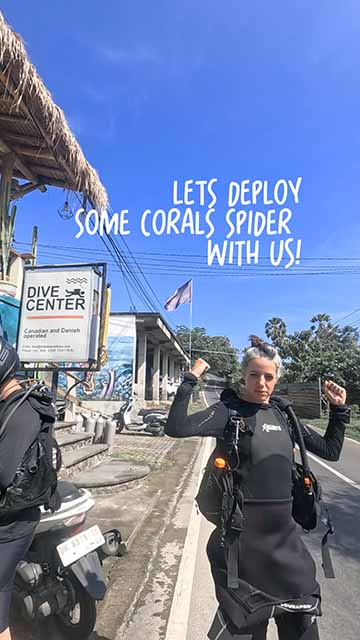
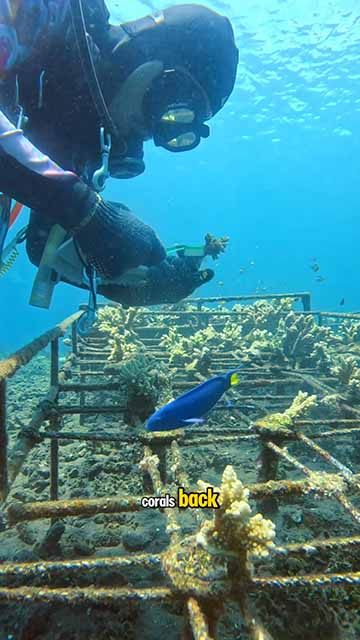
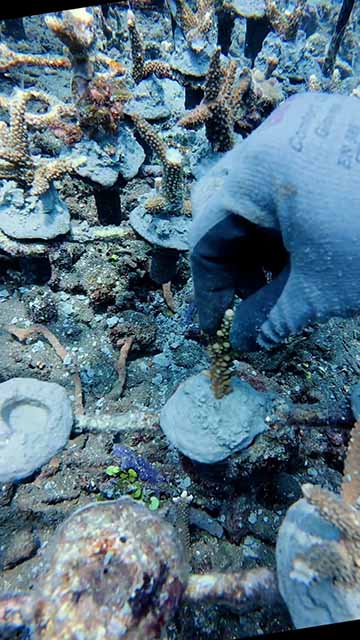
Our Past Volunteers And Trainees
Spend a meaningful and purpose driven stay here in Bali using your Scuba-diving skills to help restore the reefs of Bali.
Here's how to apply
Dates, Location & Requirements: Nusa Penida and Amed
Dates: Our volunteer and practical training program runs year-round, typically mid-month on the weeks when we are running courses and visits. You can indicate some dates where you are available to see if we are receiving interns then.
Location: We work out of the Ocean Gardener Coral Lab in Nusa Penida. However, depending on the amount of volunteers, trainees, staff and restoration needs, you can request to spend some time in Amed.
Requirements:
- Age: Minimum 18 years old.
- Certification: PADI/SSI Open Water Diver (or equivalent).
- Experience: Minimum of 20 logged dives.
- Skills: Excellent buoyancy control is mandatory. You will be handling delicate organisms; steady hands and fins are a must!
- Recent activity: A Refresher Course is required if you have not dived in over one year.
- Pre-requisite course: All interns must have completed the 3-day “Intro to Coral Restoration” certification. It ensures you have the foundational knowledge and technique to work safely on our nursery sites.
Volunteer Program Fees & Costs
For the duration of your training, you will be responsible for the rental of your own equipment, accommodation and transportation. We can help arrange this with the local dive shops and guest houses near our facility.
We charge a nominal fee for the volunteer or practicum training days of your stay to cover staff, facility use, and all restoration materials (epoxy, cement, reef stars, etc.). As a token of our appreciation for your dedication, the daily rate decreases for longer stays.
We appreciate everybody coming to help. We are a small NGO that relies on donor funds to operate and we must make sure our limited funds go towards our planting and research projects.
| Duration | Fee (IDR) |
|---|---|
| Daily Rate | 800,000 |
| Weekly Rate | 3,800,000 |
| Monthly Rate | 13,000,000 |
Specialized Dives: Occasionally, we conduct coral spawning monitoring or scientific survey dives. Volunteer or trainees can join these for an additional IDR 300,000 per dive.
Frequently asked questions
What kind of visa do I need for the program?
In Indonesia, immigration requires volunteers to have a special volunteer visa. However, visitors on a tourist visa to Bali are allowed to take courses and educational training programs.
For short stays, we can add practicum days to your Intro to Coral Restoration course which is covered under your tourist visa, like any other Scuba course.
For longer stays, we can work with you or your visa agent to apply for the required visa.
Go ahead and apply and we can coordinate with you on the visa process.
How long can I stay and volunteer?
Once certified, you can opt to stay for as long as you wish during the weeks our staff is not in the field. As an intern, your typical day involves morning dives (subject to change depending on staffing, weather, and logistics) focused on reef maintenance, nursery cleaning, and coral transplantation. Typically, there is 1 restoration dive per day.
Do you offer formal educational internships?
As we are a small NGO, we do not have the ability to assign a dedicated supervisor, as required by most educational internship programs to supervise your research project or practicum work.
However, if the current volunteer or training program’s format qualifies you for hands-on credits for your internship requirements, you are apply to join the program.
I am volunteering my time. Why isn't it free?
We are very appreciative of your contributions.
Volunteer and internship programs typically have a fee to cover costs of running the program and help fund the on-going restoration work .
Your safety and the welfare of the coral is important to us, hence an experienced staff member is always assigned to guide and supervise volunteers and trainees. Also, there is the cost of the Coral Lab, permits for the coral area, gasoline and boat staff and materials for coral planting.
The additional funds go towards our outreach programs to build more coral advocates in communities in Indonesia and the replanting and maintenance of our restoration sites here in Bali.
Is travel or dive insurance required?
Yes, we require proof of Scuba dive insurance before your first restoration dive. We can recommend providers if you don’t already have coverage.
Why is the volunteer / training program not available in certain times?
Our staff is on the field typically at the start and end of month for various restoration work like coral spawning monitoring, workshops in other parts of Indonesia or training programs. As such, nobody will be at our Coral Lab to help coordinate and supervise the volunteers and trainees during those periods.
What does a non-diving day look like?
Occasionally there may be non-dive days for gear maintenance, education material preparations or general clean-ups of the Coral Lab. On free days, volunteers and trainees may spend the day exploring the island.
Ready To Make An Impact?
The reefs of Bali need you. Join us for a fulfilling experience of learning about the corals, how restoration works and helping hands on during the internship to replant the reefs here in Bali.