
Proof, not promises
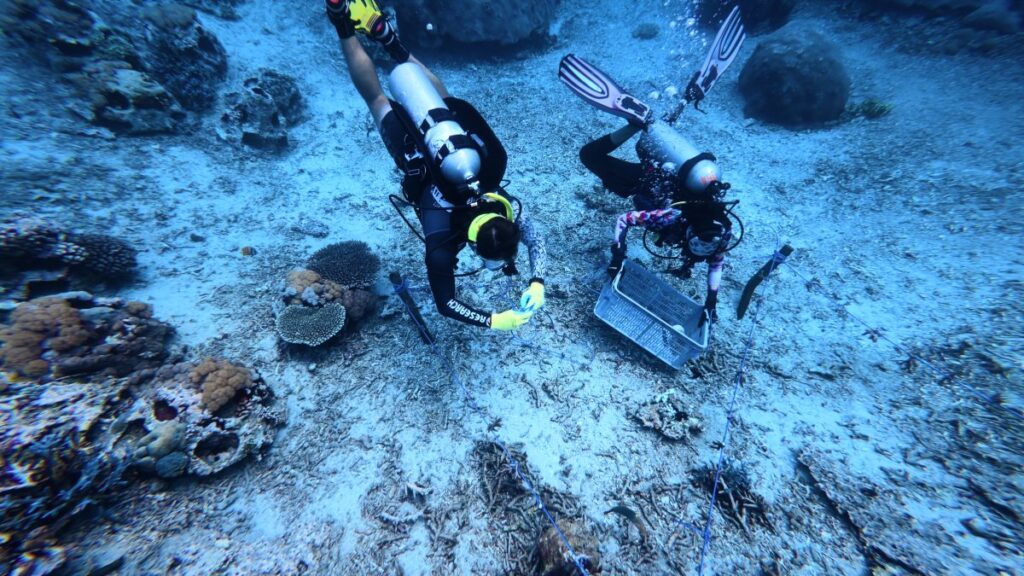
Ocean Gardener divers laying out lines and planting coral fragments on a rubble field.
Anyone can say they plant corals. We’d rather show you. At our sites in Ped, Nusa Penida and in Amed, reefs that mooring blocks, anchors and destructive fishing had reduced to rubble are growing back. Every fragment is raised in our nurseries, attached by hand to ropes, stakes and Reef Stars, and monitored until it can survive on its own.
This page is our open logbook. The live map shows where each new coral has been planted, whether by our staff, our partners, or a course trainee or visitor like you!
Coral diversity
From branching colonies to plating and encrusting forms, each coral fills a different niche, and a diverse reef is a resilient one. We deliberately increase the diversity of our restoration sites by raising many different genera and species in our nurseries, and by outplanting fragments from many different donor colonies. Our nurseries sit in the shallows to build heat tolerance, so that once the corals are outplanted into deeper water they can better withstand the warming oceans of the future.
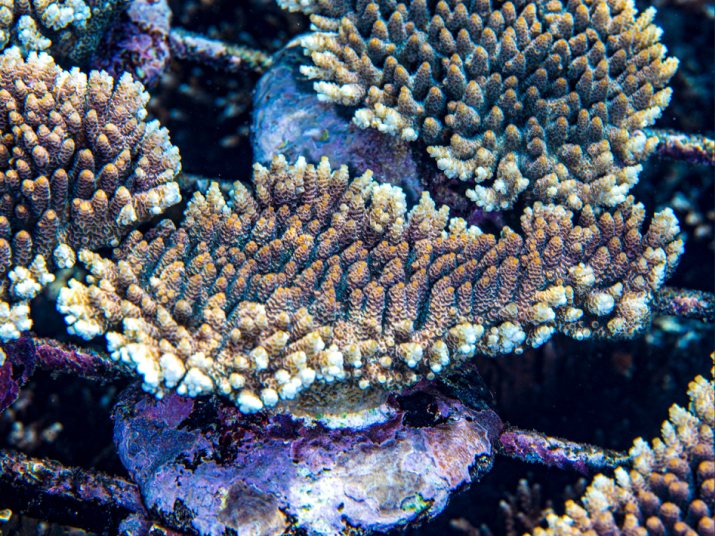
Acropora nana
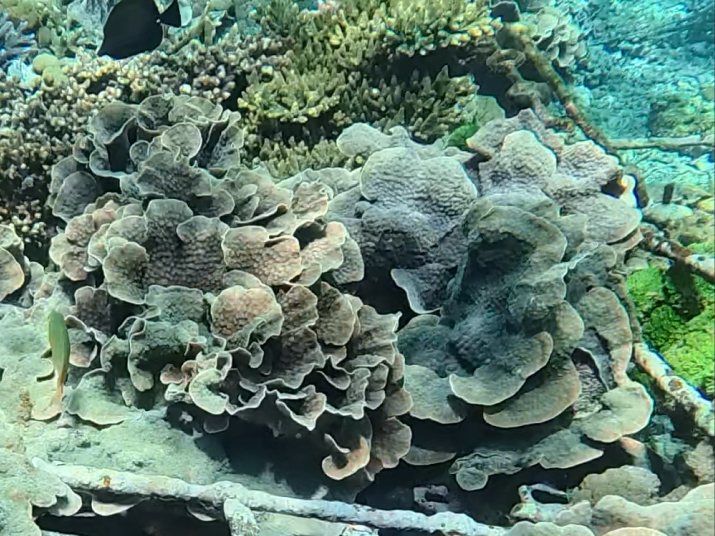
Echinopora
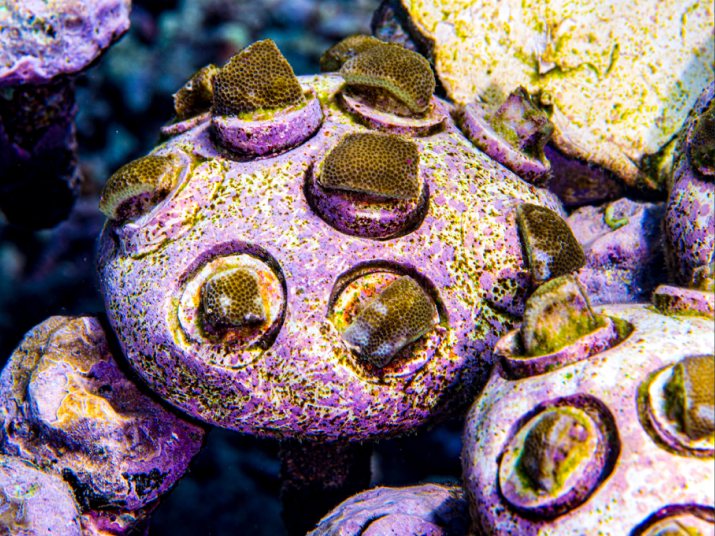
Porites
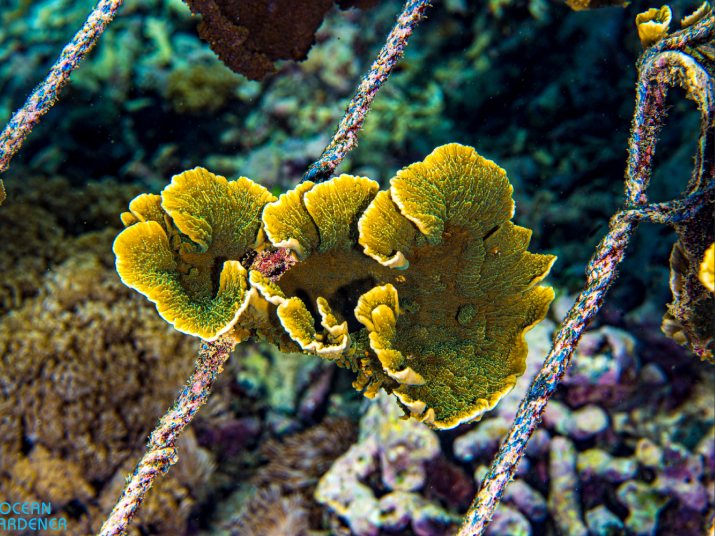
Montipora
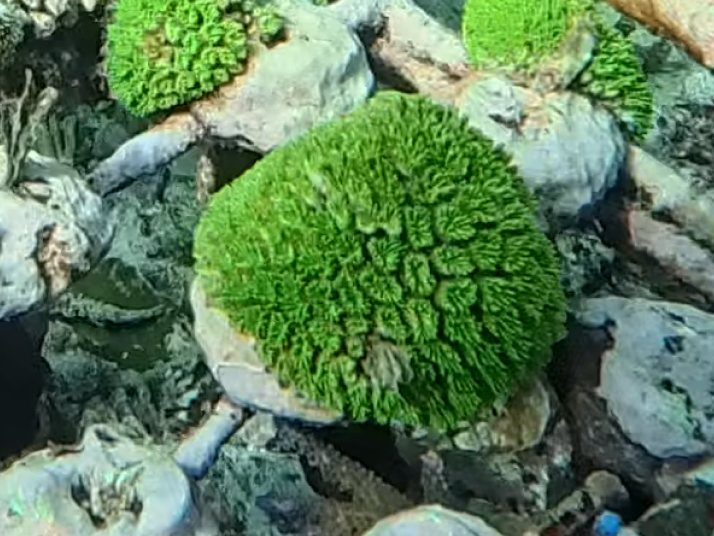
Galaxea
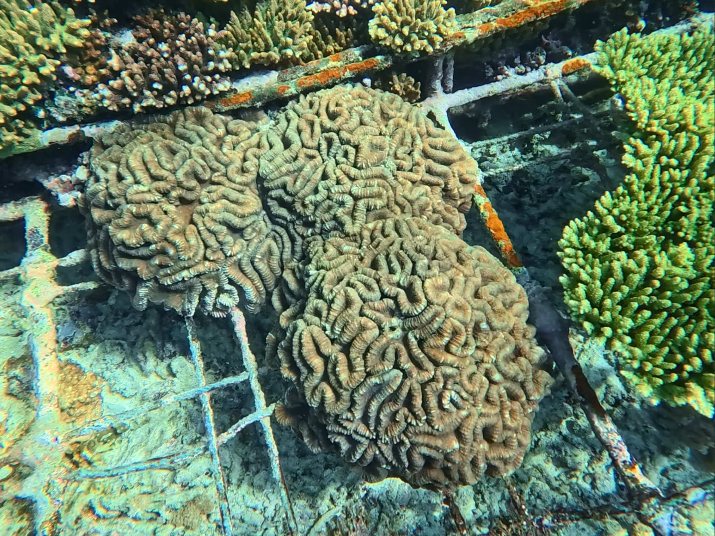
Lobophyllia
Since July 2025, our plantings and maintenance have been tracked so you can see our work on the map below. The work of every visitor, course attendee and scholarship awardee is shown on the map. Every planting dive and maintenance session is logged and counted.
345,721
Corals planted
123
Year-to-date corals planted
515
Crown-of-thorns starfish removed*
7,070
Drupella snails removed*
*Since July 2025

Restoration site #1
Our Ped restoration site is our proudest achievement. Pontoons and years of seaweed farming cleared large sections of the reef, and their mooring blocks and chains reduced it to rubble. Working alongside the local fishing community in northern Nusa Penida, we have replanted over 1.2 kilometres of damaged reef through years of dedication and collaboration. This partnership has given fishermen pride and ownership in their local reefs, empowering them to become active stewards of their marine environment. The area now attracts eco-tourism, so the community can earn a living from maintaining the reef rather than exploiting it. With deep, cold water upwelling in the channel and strong currents, we hope the reefs of Ped will be a beacon of hope that survives the warming oceans.


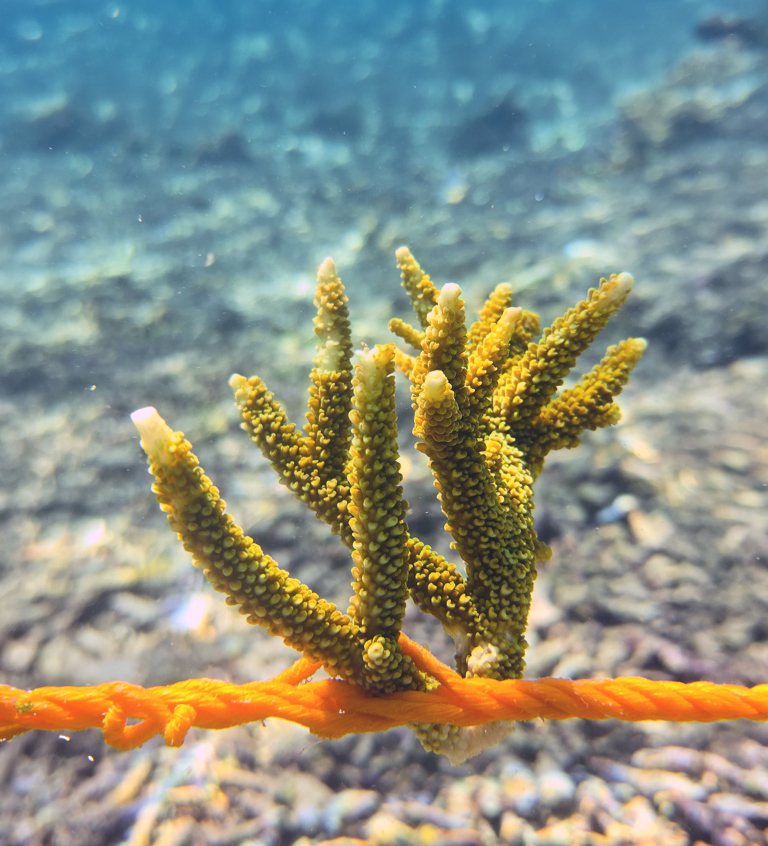
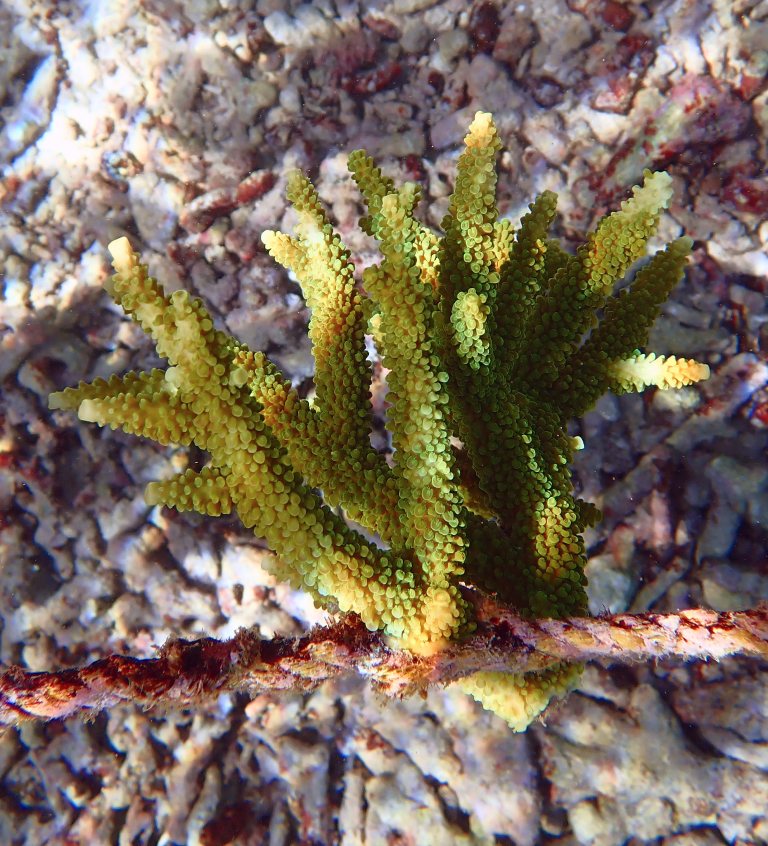
Day 0: After planting
This Acropora pulchra fragment was photographed right after planting. We have been following it as part of our Coral Adoption program.
Day 90: Maintenance dive
We monitor growth and remove Drupella snails and crown-of-thorns starfish, which can quickly devour small, fragile baby fragments.
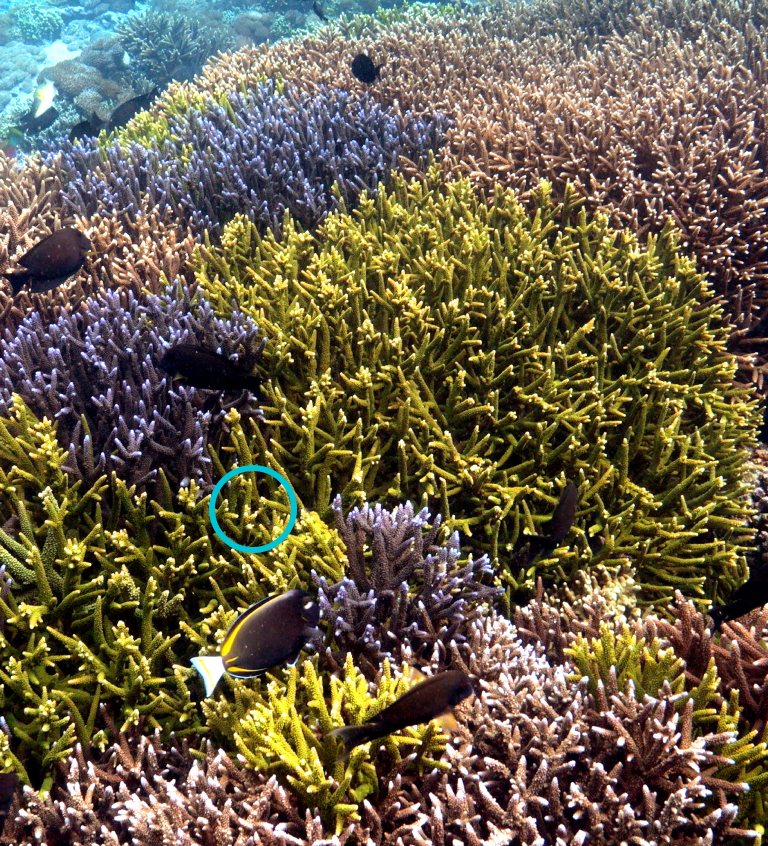
7 years later
The corals interlock and provide plenty of habitat for marine life. They anchor themselves into the ground as the wooden stakes naturally decompose. See how many fish there are.
April 2024
July 2026
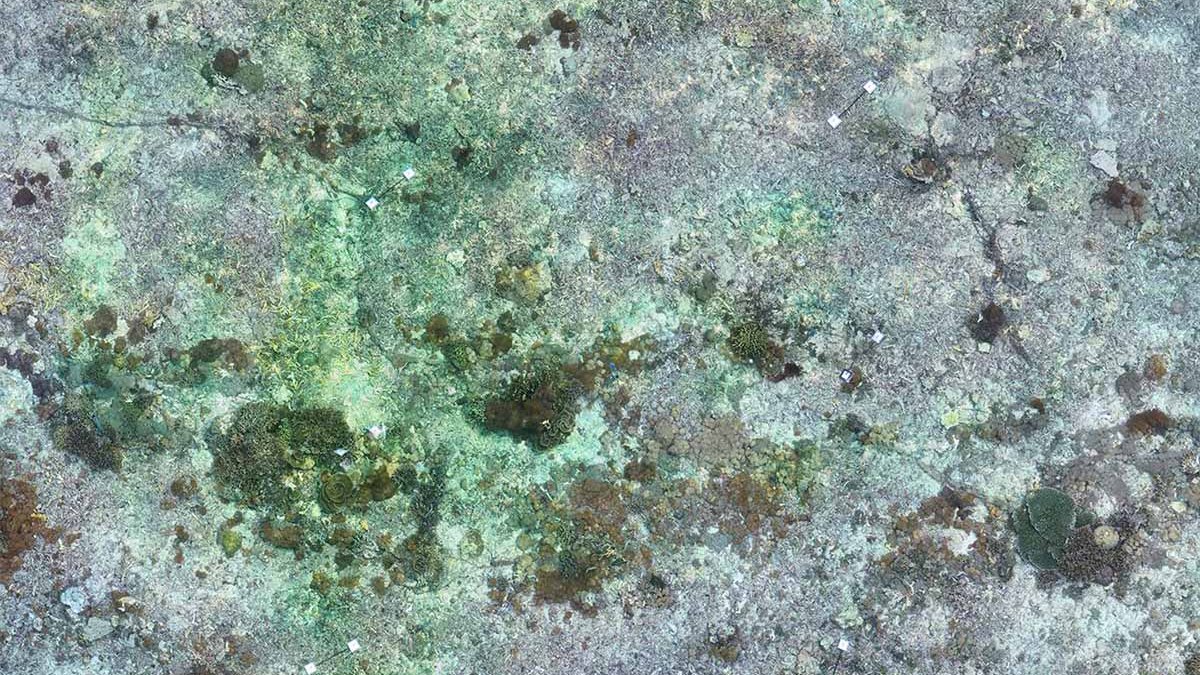
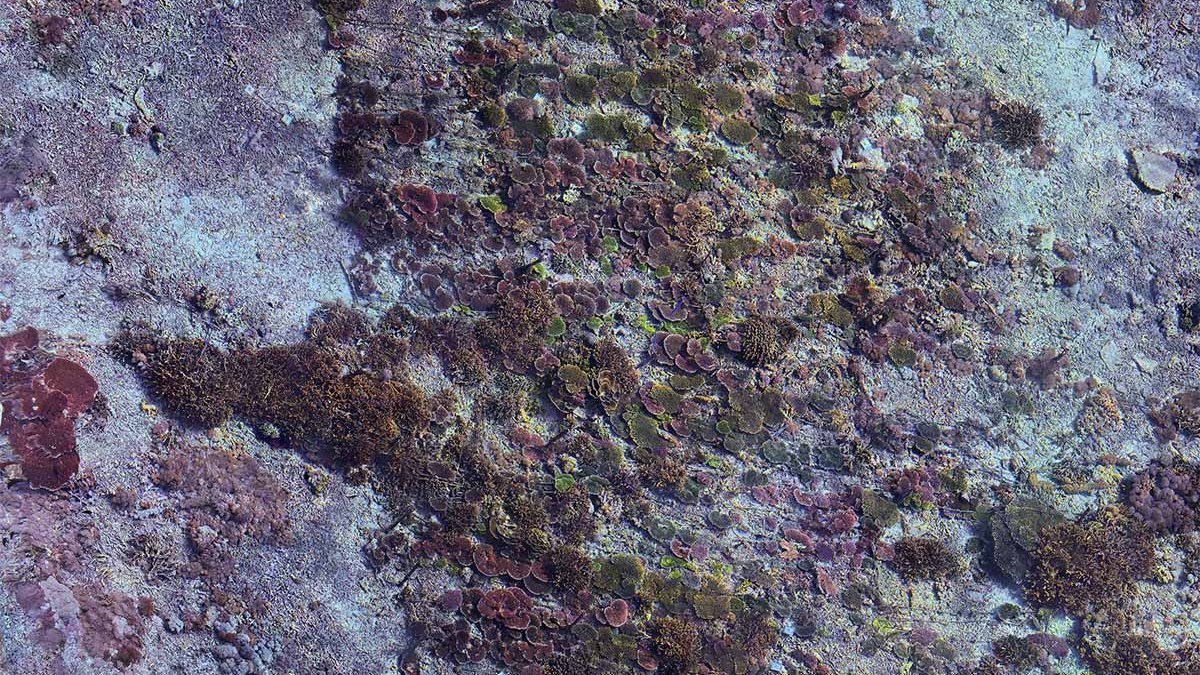
3D photogrammetry survey of the same patch of reef, Ocean Gardener.
↔ Drag the divider to compare
March 2022
July 2026
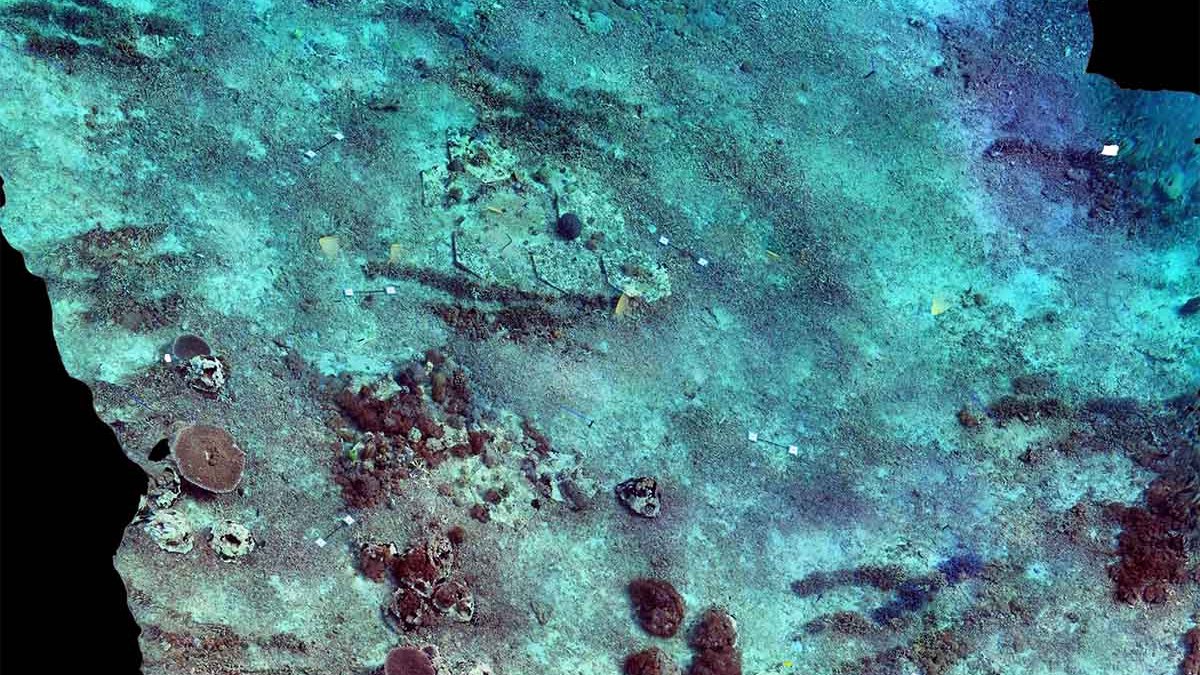
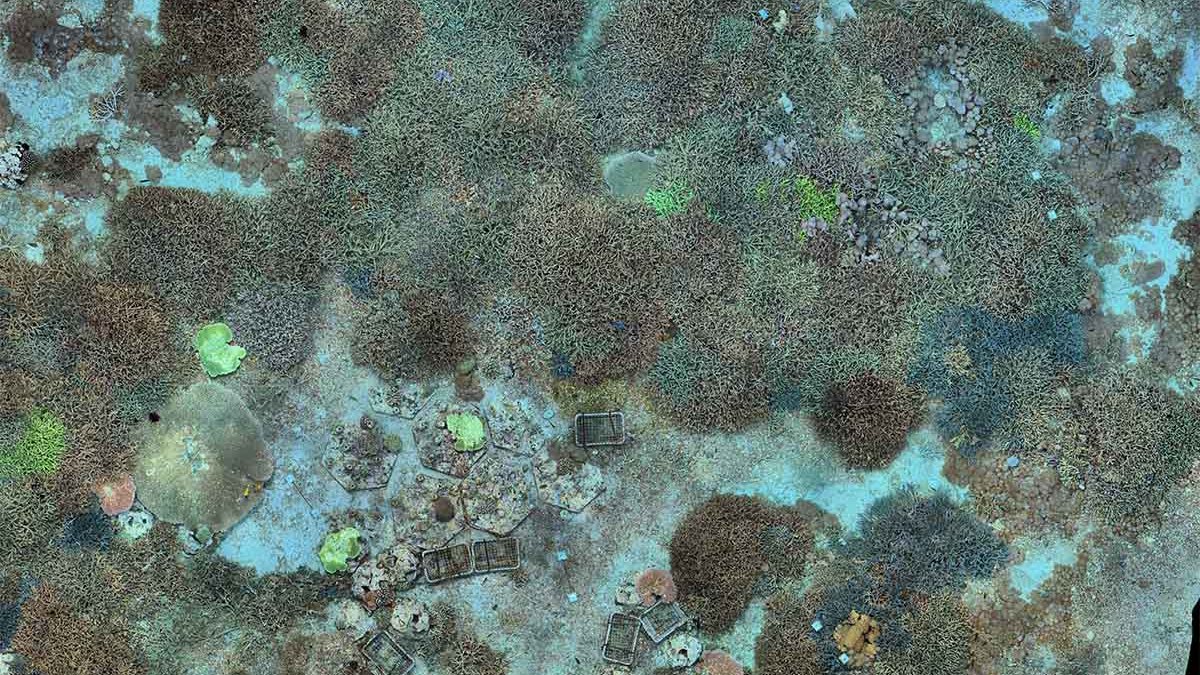
3D photogrammetry survey of the same patch of reef, Ocean Gardener.
↔ Drag the divider to compare
We warmly invite you to visit our Ped restoration site, adopt a coral or volunteer to support our coral restoration work.

Restoration site #2
On Bali’s quiet northeast coast, beneath the slopes of Mount Agung, Lipah Bay is where our coral nursery work in Amed began. Our two nurseries, a shallow one at about 6 m and a deep one at 16 m, grow coral species adapted to local conditions, from fast-growing Acropora to plating Turbinaria and massive Porites. From them we have outplanted over 10,000 corals onto the surrounding reef, cementing fragments onto rubble and seeding Reef Stars to give loose ground a stable base. Our team removes coral-eating Drupella snails and fast-growing sponges to protect young colonies.
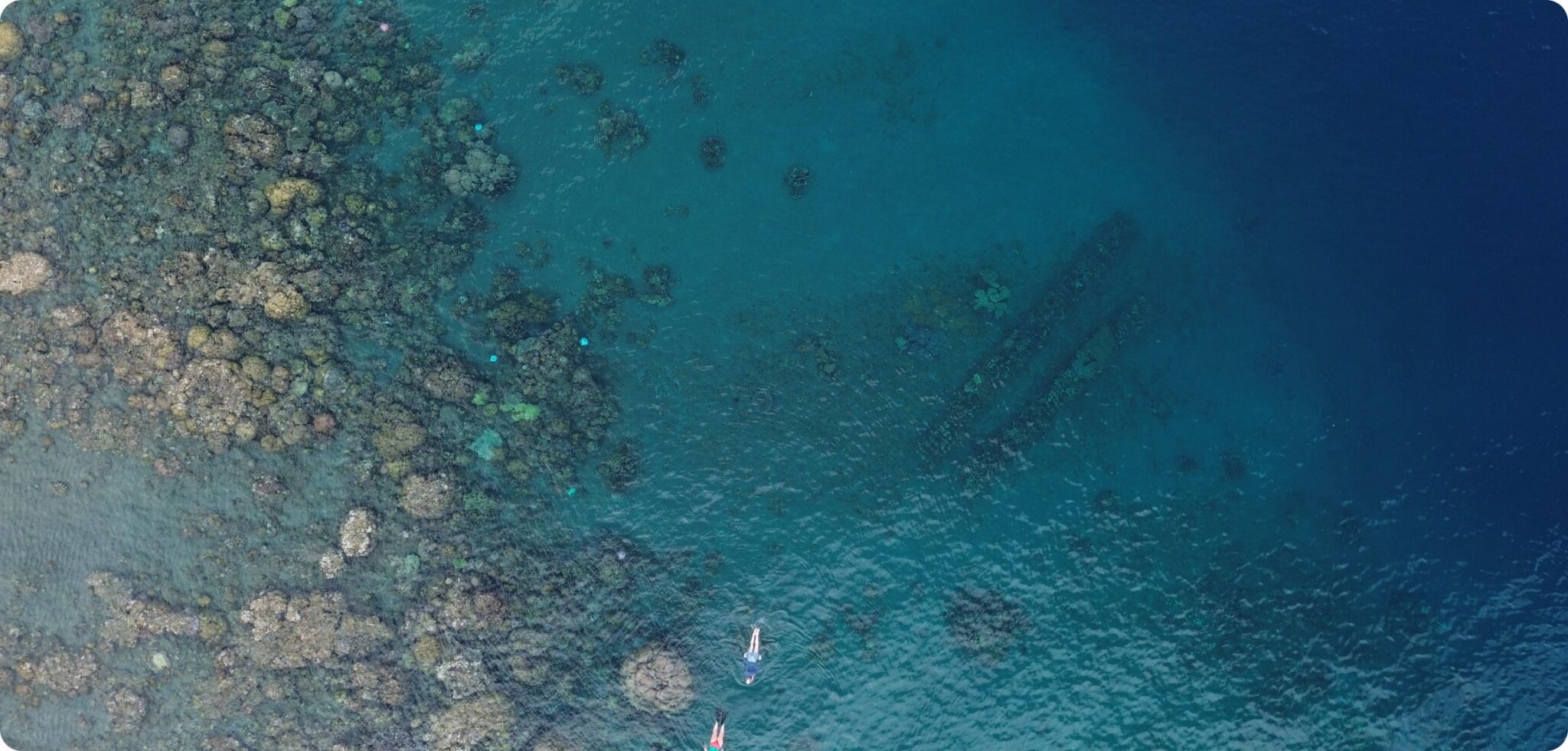
We have a thriving coral nursery in Lipah Bay. However, the high nutrient load from coastal development and minimal community involvement mean more manual labour to weed the nurseries and restoration sites of algae, coral-killing sponges, Drupella snails and crown-of-thorns starfish. We have found allies in local dive shops and regenerative tourism agencies, and we hope to grow awareness so that one day Amed’s recovery can outpace its decline.
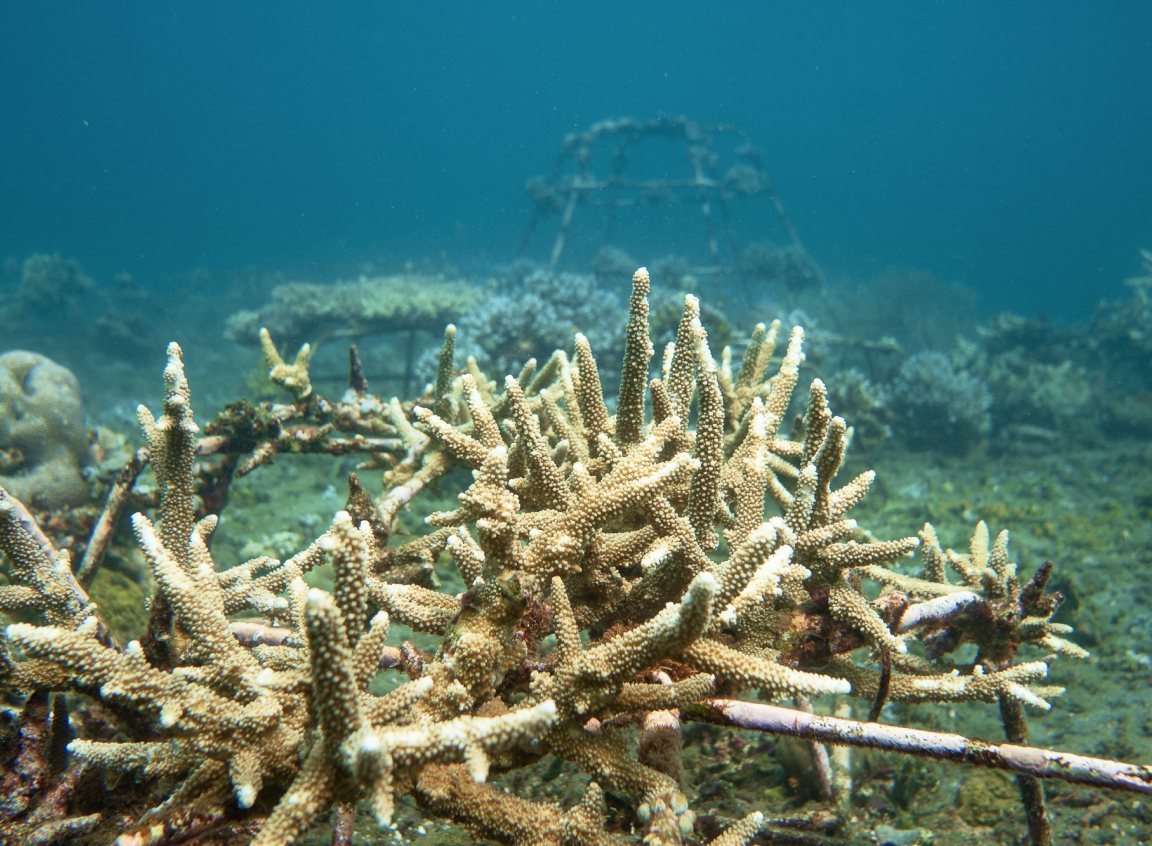
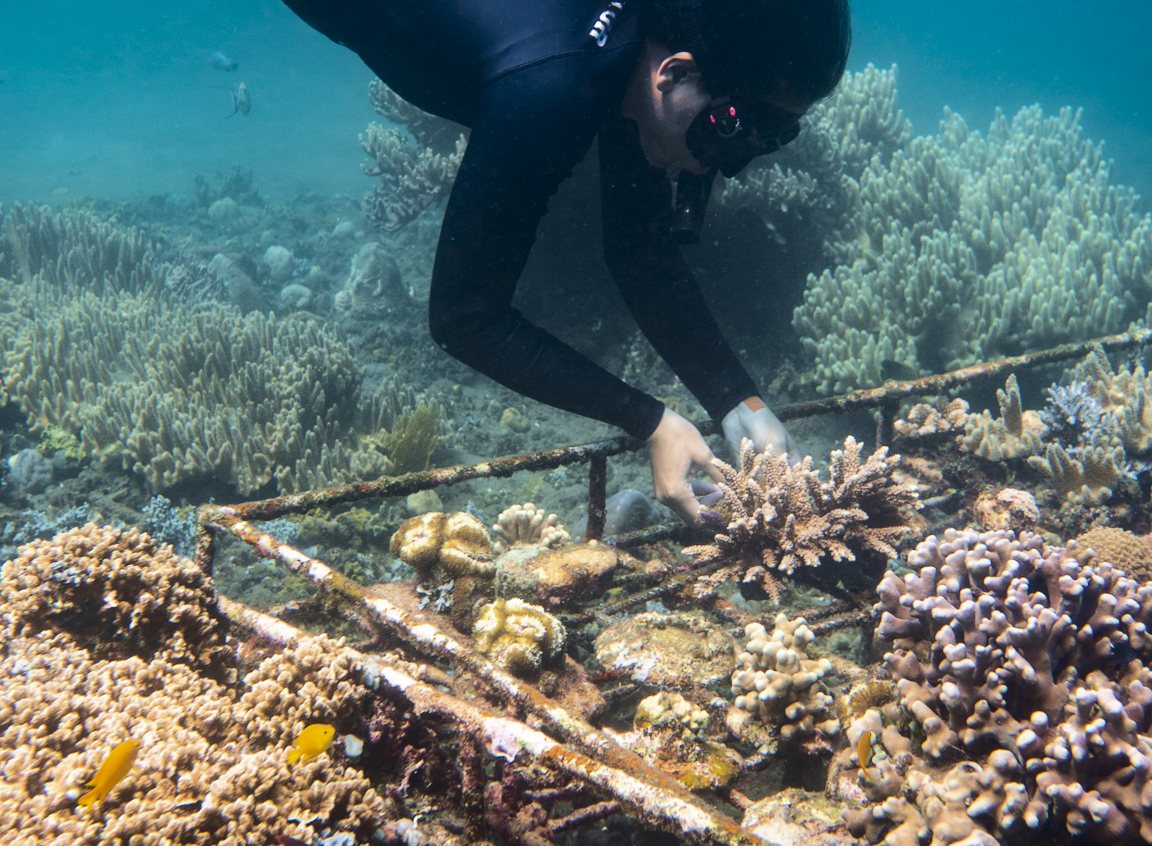
Join our Amed Coral Restoration Experience: snorkel the nursery with a marine biologist, learn how reefs are rebuilt and plant your own coral. The calm, shallow water of the bay is perfect for beginners. Every tour funds our restoration work and supports the local guides who lead it.