
One morning, something appeared in front of our office in Ped, Nusa Penida that hadn’t been there the day before: a mooring line, floating on the surface, tied off to nobody-knew-what beneath it. No one had installed it with our knowledge, and no one could say who had put it there or when.
At first, it didn’t look like much of a problem. From the surface, a mooring is a simple, almost unremarkable thing — a line disappearing into the water, equipment any boat could use to tie up rather than drop anchor. That’s normally a good thing: a properly installed mooring protects a reef from anchor damage rather than causing it. So there was no immediate alarm. But once we got beneath the surface to take a proper look, we found a very different story.
What looked simple on the surface was a mess underneath
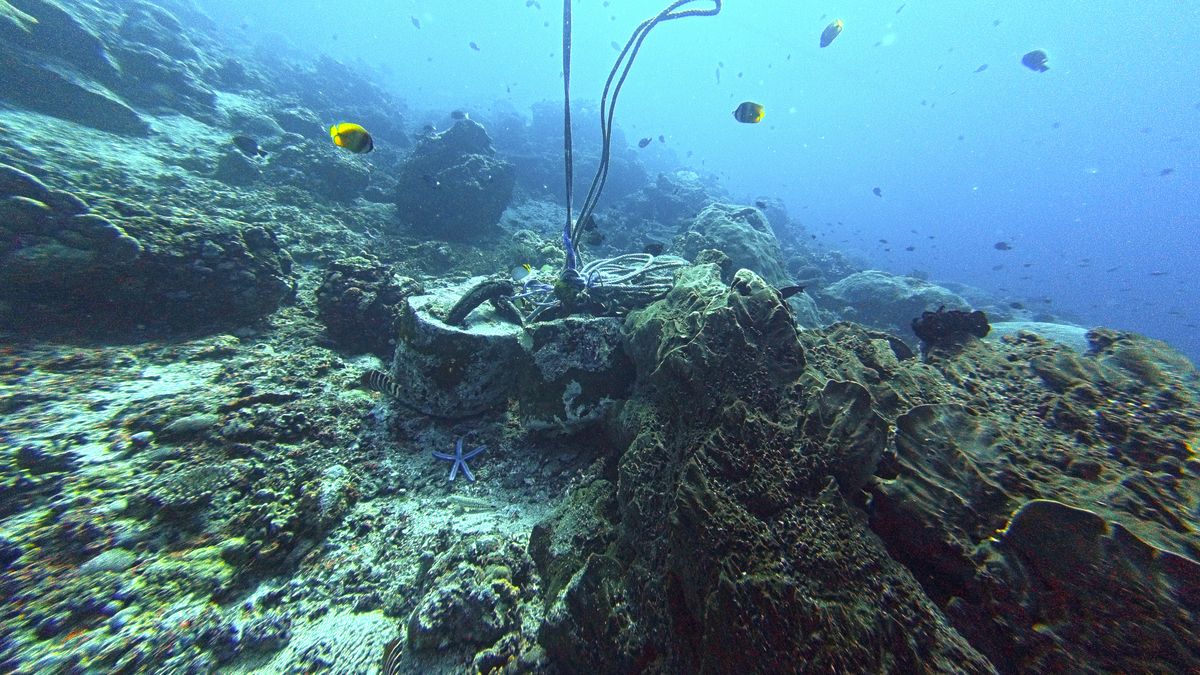
What read as a straightforward buoy from above turned out to be far more complicated once we went to inspect it underwater. Our team found that the mooring had been installed without any consideration for what was actually on the seabed below it — and, more seriously, without any regard for the fact that this stretch of reef sits inside the Nusa Penida Marine Protected Area.
Whoever installed it clearly didn’t understand the site, the ecosystem around it, or how to set a mooring correctly. A mooring is supposed to protect a reef — giving boats somewhere safe to tie up instead of dropping anchor onto live coral. This one did the opposite. Rather than a properly sized block bedded into sand or rubble well clear of the reef, the line was tied to cement blocks simply resting on top of it, with nothing holding them in place. Every surge and every boat pulling at the line shifted those blocks a little further across the rock, breaking and killing fragile coral that had taken years to grow.
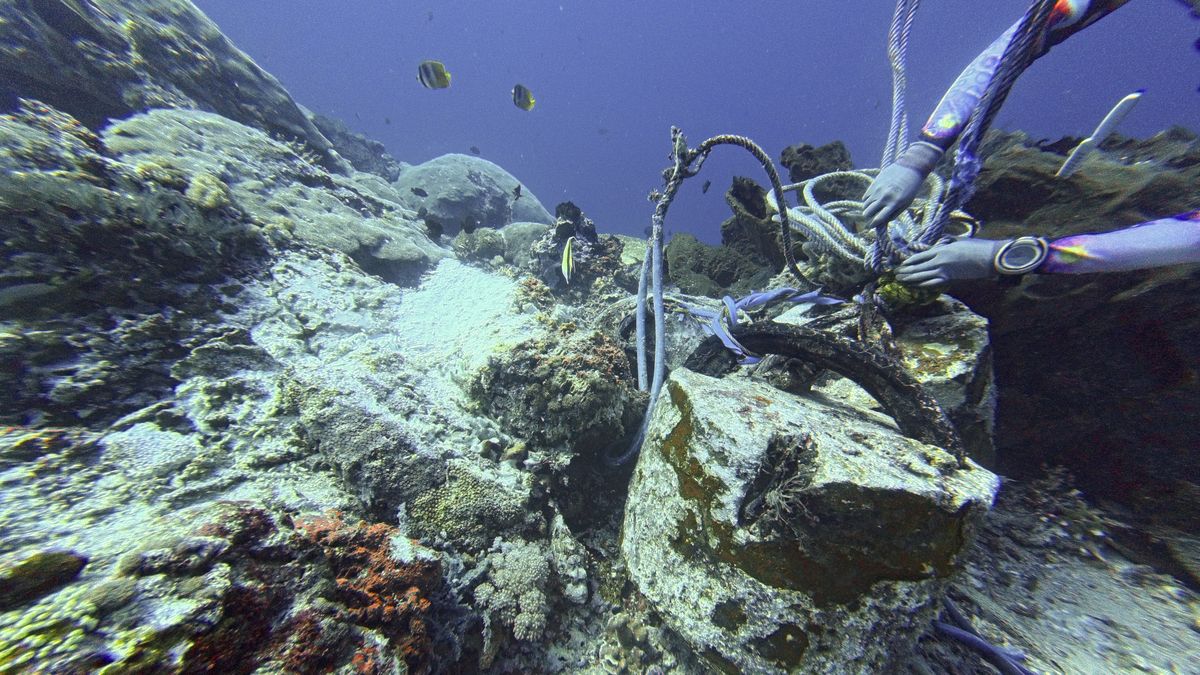
Ped is known for its rebounding marine life and is one of the more popular snorkeling and diving spots in the region. There’s a hard irony in that: the very mooring meant to serve the tourist boats bringing people here to see the reef was, tide by tide, grinding away at the reef that makes Ped worth visiting in the first place.
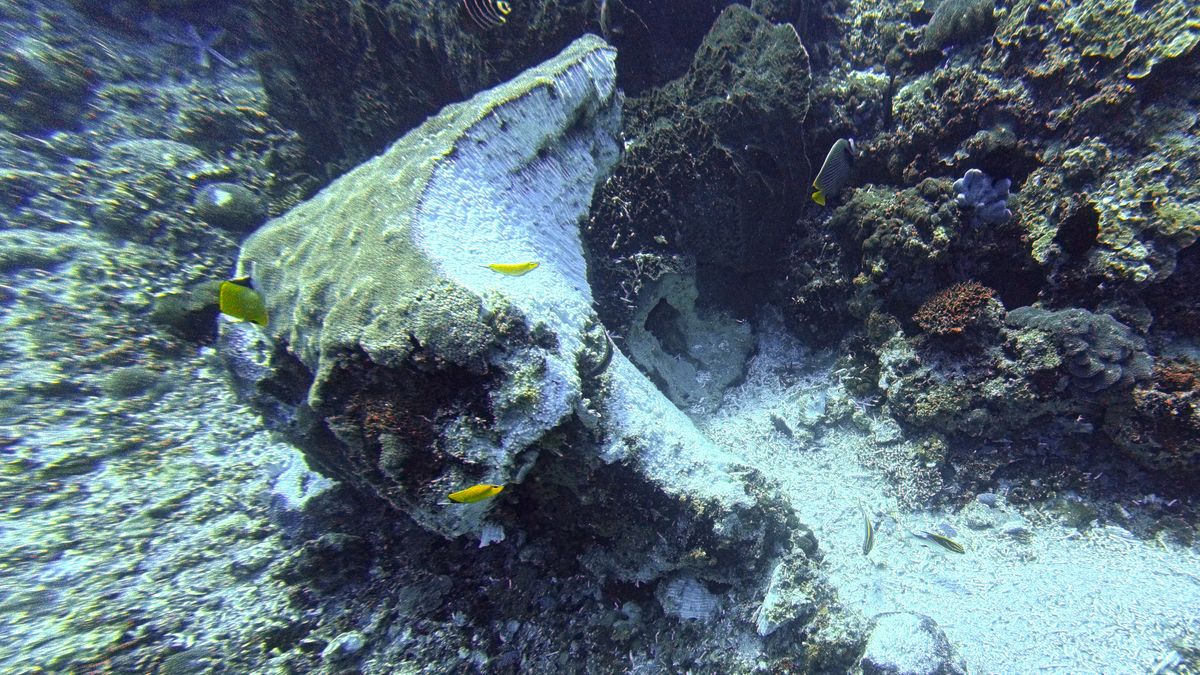
Why we couldn’t just leave it
Once we’d assessed the situation, it was clear that leaving the mooring in place would only let the damage continue. It had gone in without any of the approvals or permits a mooring inside a marine protected area requires. The waters around Nusa Penida, Nusa Lembongan and Nusa Ceningan have been managed as a marine protected area for over a decade — just over 20,000 hectares of water home to close to 300 coral species and more than 500 reef fish species, recognized as a Mission Blue Hope Spot in 2020. An unpermitted structure dragging concrete across live coral inside that boundary isn’t a grey area; it’s exactly the kind of activity the protection exists to prevent.
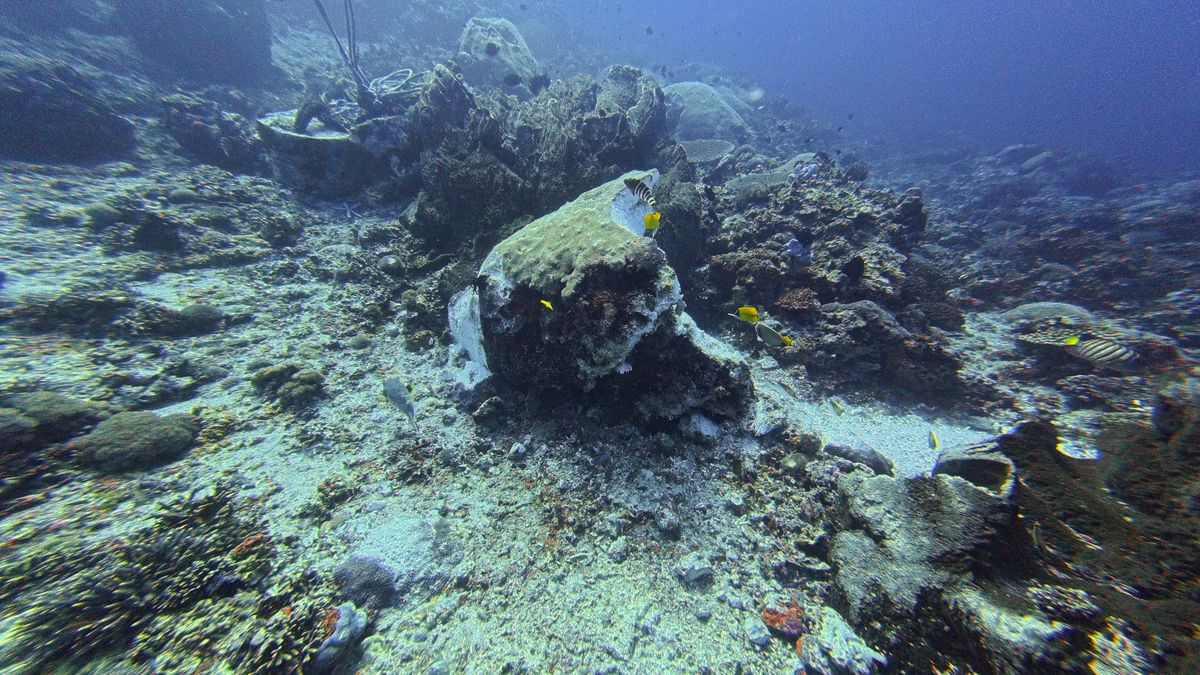
It was an active, ongoing threat to the ecosystem around it — the coral reef most of all. So we made the call to remove it. We didn’t rush the process. Pulling out a structure like this carelessly can do as much damage as leaving it in place, so our team worked through it methodically, piece by piece, to make sure the removal itself didn’t cause the reef any further harm.
What started as an unexplained buoy appearing overnight in front of our office ended with our dive team underwater, carefully dismantling the source of the problem. It’s a reminder we come back to often in this work: sometimes protecting a reef starts with knowing what needs to come out, before you can begin restoring what’s already been lost.
What proper mooring installation actually looks like
A mooring done right protects a reef instead of damaging it — but only if it’s sited and sized properly in the first place. We’ve written before about what a good boat mooring for a reef site actually needs: an anchor point set into sand or rubble well clear of live coral, sized for the vessels it’s actually meant to hold, attached to line that gets inspected and replaced before it degrades.
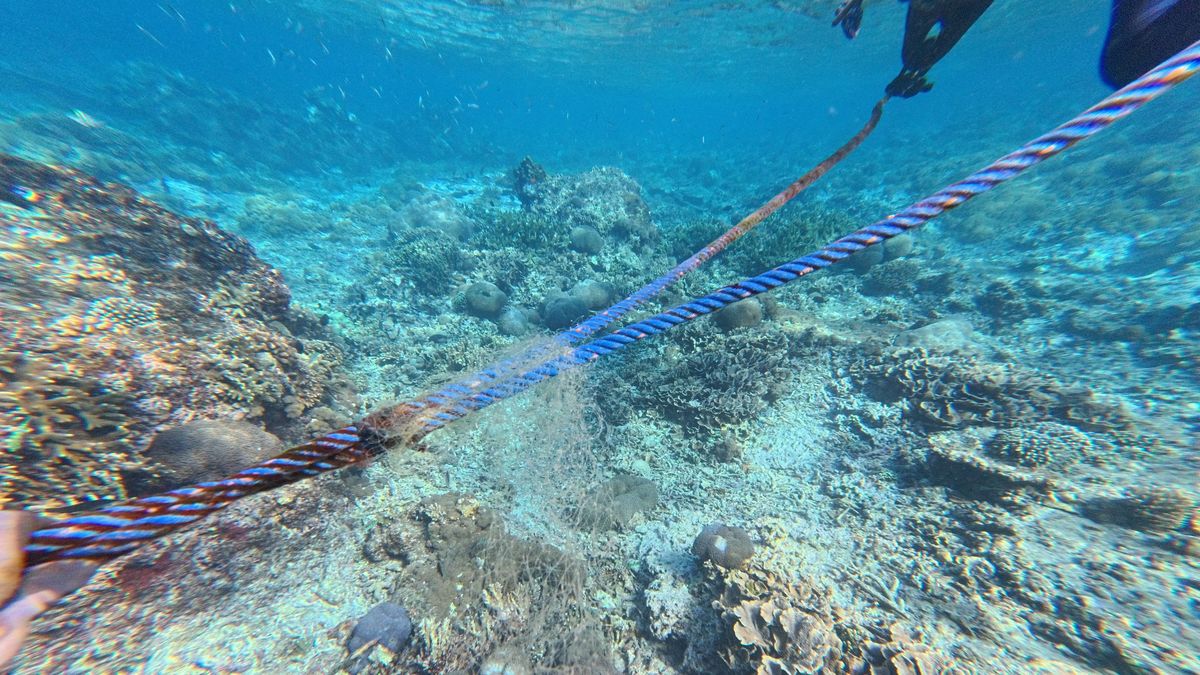
This isn’t a hypothetical risk for us, either. More than once, one of our own moorings was moved into the shallow — the same dragging, scraping motion that damaged the reef here — and caused comparable damage before we caught it. When that’s happened, we’ve pulled our own mooring block out, the same as we did with this unpermitted one. It’s why we treat mooring inspection as a recurring job rather than a one-time install: even a mooring that was sited correctly on day one can turn into exactly this kind of problem if nobody checks on it.
A mooring that’s undersized, too shallow, or simply forgotten about eventually turns into exactly what we found here — bare concrete dragging across the reef once the rope gives out, with nothing stopping it from causing damage every time a boat ties up.
It’s also why we’d encourage anyone installing a mooring in or near a reef — a dive shop, a hotel, a community group — to get the site properly assessed first, rather than guessing at what’s safe underwater from a boat on the surface. This is exactly the kind of on-the-ground expertise we’ve built up through years of restoration work in Ped, and we’re glad to put it to use before a mooring goes in, not just after one goes wrong.
If you’re boating or diving around Nusa Penida, a properly installed, permitted mooring is one of the simplest ways to protect the reef beneath you — and it’s worth knowing that not every line in the water is one. If you ever spot gear like this in a conservation area and aren’t sure of its origin, it’s worth flagging to a local dive shop, tour operator, or coral conservation NGO like Ocean Gardener so they can evaluate the situation.
Since corals take so long to grow, saving and conserving what already exists is far more valuable than having to restore it later. Think of an old-growth forest: it supports far more diversity than a replanted one, which needs decades to even begin catching up. Reefs work the same way.
If you’re a local community, dive shop, or Marine Protected Area authority in Indonesia dealing with a similar situation, feel free to contact us — we’re glad to share what we’ve learned.