
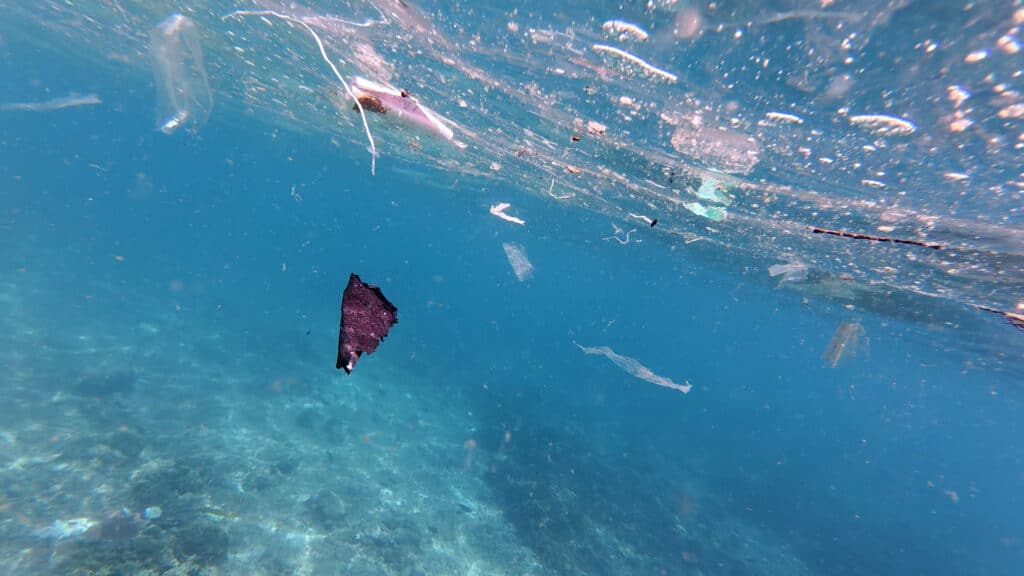
The turquoise waters around Bali are famous for their coral reefs and legendary dive sites — Tulamben, Amed, Nusa Penida. It’s the kind of underwater paradise that draws divers and snorkelers from around the world. But on our recent dives, we swam through something else entirely: a disheartening drift of plastic debris, drifting over the reef like a second current.
It’s not just us. Bali’s beaches have made international headlines for tides that wash in more plastic than sand. In response, the island has taken its boldest step yet — a full ban on small plastic bottled water under one liter, now in effect across Bali as of January 2026. For reefs that have been slowly strangled by plastic for years, the timing couldn’t matter more.
Progress on the ground — and plastic that lingers
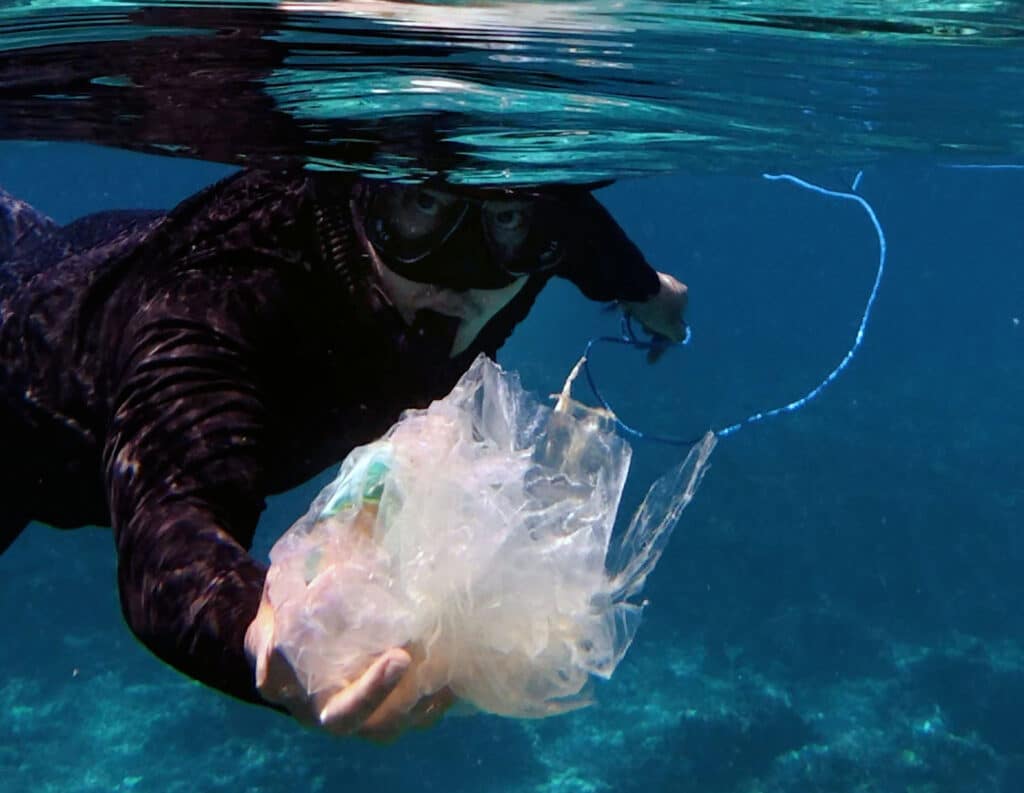
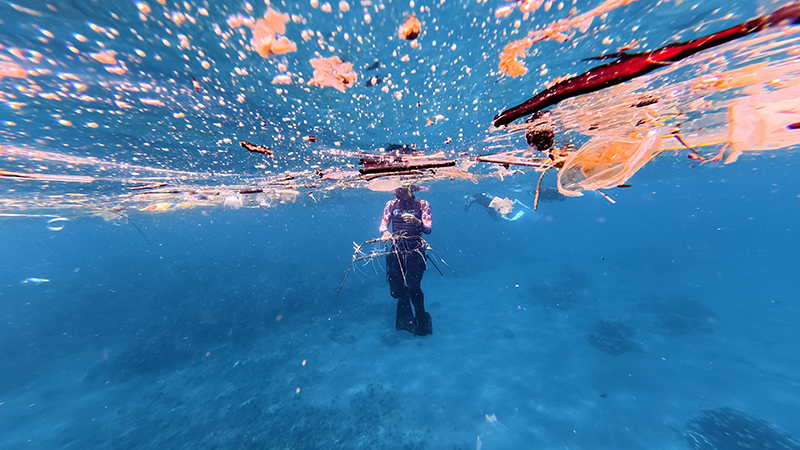
We’ve seen the ban’s ripple effects firsthand. During a recent Mudfish collaboration, we took local students out to plant coral in Amed. Their first snorkel session, though, was cut short by a sea of floating plastic — a reminder that policy on paper takes time to translate into clean water.
Why this matters for Bali’s tourism economy
Bali welcomes nearly 6.5 million tourists a year — and that volume of visitors means a lot of waste. Plastic pollution doesn’t just harm marine life; it threatens the very beauty that tourism depends on. Bali’s plastic ban isn’t only an environmental policy — it’s an economic one.
The problem isn’t purely local, either. A significant share of the plastic that washes up on Bali’s shores, especially during monsoon season, actually travels here from other Indonesian provinces like East Java and Kalimantan, carried by ocean currents collectively known as the Indonesian Throughflow. That means local bans are essential, but they can only go so far without stronger regional waste management across Indonesia.
The scale of Bali’s waste crisis
The numbers are sobering. Bali generates around 3,436 tons of waste every day — roughly 1.2 million tons a year — and only about 17% of that is recyclable. Waste generation has climbed 30% since 2000, driven by population growth, tourism, limited infrastructure, and a fast-growing consumer culture.
Bali’s main landfills, including the long-overburdened Suwung site, have hit full capacity, pushing illegal dumping into the open. It’s a stark illustration of an infrastructure-behavior gap: even where awareness and intent exist, the system often can’t keep up. Waste processing is also expensive — about $100 per ton — which is exactly why experts argue that reducing plastic waste at the source is the cheapest, most effective long-term fix, and a smarter economic bet than cleaning up the damage later.
How Bali’s plastic ban got here
Bali’s fight against single-use plastic didn’t start in 2025 — it goes back to Gubernatorial Regulation No. 97 of 2018, a landmark policy that targeted plastic bags, styrofoam, and straws, with a goal of cutting marine plastic waste by 70% within a year. Business owners pushed back, but Indonesia’s Supreme Court upheld the regulation as necessary, “extraordinary” policy. Even so, later audits — including Sungai Watch’s 2024 river cleanup data — still found plastic bags among the most common items pulled from Bali’s rivers, a sign that good laws alone don’t guarantee good outcomes.
That gap is part of what led to the newest and toughest measure yet: Circular Letter No. 9 of 2025, issued by Governor I Wayan Koster in April 2025. It bans the production, distribution, and sale of small plastic bottled water — anything under one liter, including cups and half-liter bottles — making it the first policy of its kind in Indonesia to target small-format plastic bottles specifically. It’s a direct response to independent audits that repeatedly flagged bottled drinks among the top polluting brands found in Bali’s rivers.
One legal wrinkle worth noting: unlike the 2018 regulation, a circular letter doesn’t carry the same formal legal weight in Indonesia’s regulatory system. That means its long-term durability may depend on further legislative backing down the line — something worth watching as enforcement continues.
Enforcement across the island
The ban touches six sectors: government offices, traditional villages, businesses, hotels and restaurants, schools, marketplaces, and places of worship. It’s part of the wider “Bali Clean Waste Movement,” launched in March 2025 with an ambitious target: a waste-free Bali by 2027. As of January 2026, the ban is fully enforced, including in malls and hotels.
Grassroots support has been striking — 96% of Bali’s roughly 1,500 traditional villages (desa adat) have adopted their own customary rules mirroring the plastic restrictions, backed by Bali’s unique blend of formal government policy and traditional village law. Businesses and villages that comply are eligible for incentives; those that don’t risk administrative penalties, public disclosure, or even the loss of business licenses or village funding.
As Governor Koster put it: green hotels, green malls, and green restaurants are the future Bali is betting on — and destinations that aren’t environmentally friendly shouldn’t expect international travelers to keep showing up.
What plastic pollution does to Bali’s marine ecosystems
BEverything we see on our dives is backed up by the research. In the Nusa Penida Marine Protected Area — one of Bali’s most important conservation zones — a staggering 94% of marine debris samples collected were plastic. At Manta Point, manta rays have been spotted swimming through garbage with plastic bags caught around their mouths. These filter feeders are especially vulnerable to microplastics, with estimated ingestion rates as high as 63 pieces per hour in Nusa Penida alone. Wider studies confirm microplastic contamination is now widespread in Bali’s waters, raising serious concerns about toxic additives working their way up the marine food chain.
Coral reefs take a direct hit too. Larger debris like fishing nets and plastic sheeting can smother coral, blocking the sunlight it needs and causing physical damage through abrasion. As plastics break down into microplastics, they can lodge in coral polyps, interfering with feeding and, over time, leading to starvation. Plastics also act as rafts for harmful bacteria, raising the risk of coral diseases like White Syndrome and Black Band Disease — both capable of wiping out entire reef sections. Add in chemical leaching from plastic additives, and you get compounding pressure on coral growth and reproduction. Eventually, this pollution doesn’t stay confined to the ocean — it works its way into the human food chain too.
Where we go from here
Bali’s plastic crisis demands sustained, coordinated action — and Circular Letter No. 9 of 2025 is a genuinely significant step forward. It’s not a finished solution, but it’s a clear signal of intent. We hope local businesses, villages, and visitors alike keep building on this momentum, cutting single-use plastic out of daily life and protecting the reefs that make this island worth visiting in the first place. Bali’s tourism economy and its marine ecosystems are two sides of the same coin — and safeguarding one means protecting the other.
Ocean Gardener is a coral restoration organization based in Amed, Bali, running coral planting tours, courses, and reef conservation programs. Learn more about our coral restoration work or join us for a snorkel visit of our coral nurseries.
Sources
- RKC-MPD, Laws and Regulations Indonesia — https://rkcmpd-eria.org/indonesia/local-regulations
- SSEK Law Firm, New Waste Policy in Bali Targets Single-Use Plastics — https://ssek.com/blog/new-waste-policy-in-bali-targets-single-use-plastics/
- IESR, Solutions to Bali’s Waste Crisis — https://iesr.or.id/en/solutions-to-balis-waste-crisis-reducing-waste-at-the-source-and-developing-waste-management-infrastructure/
- Sungai Watch, Cleanups — https://sungai.watch/pages/cleanups