
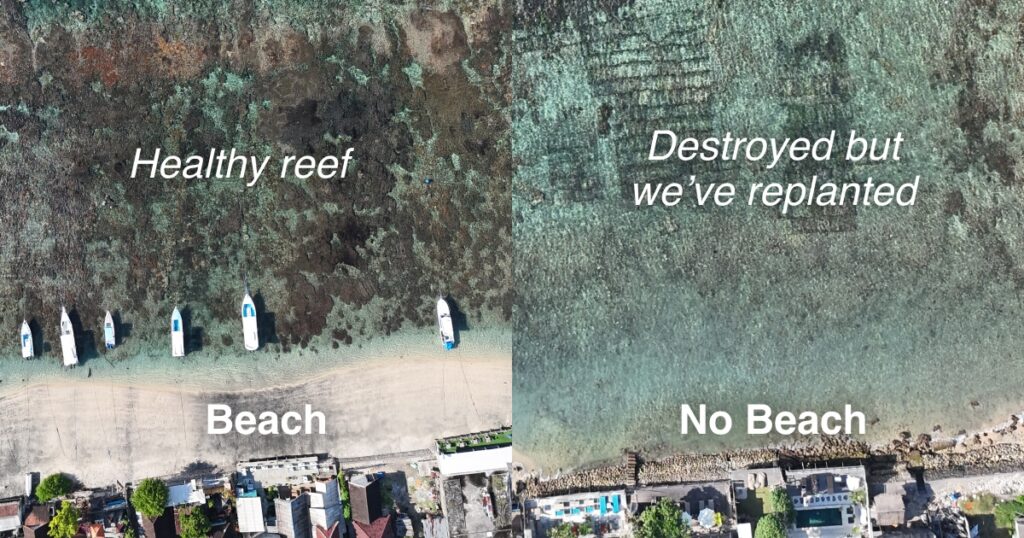
The main functions of healthy coral reefs are to protect our coastlines and feed local communities. Let’s talk about the critical first point: coastal defense. As we set up our coral lab in front of our main coral reef restoration site, we face a stark reality—wherever there is healthy coral in the lagoon, we have a beautiful, stable beach.
Conversely, where the corals are damaged, the beach vanishes, and the seawall is constantly battered and degraded by strong wave energy. Coastal erosion is a severe issue, making it one of our highest priorities to plant coral and restore our beach naturally through dedicated marine conservation efforts.
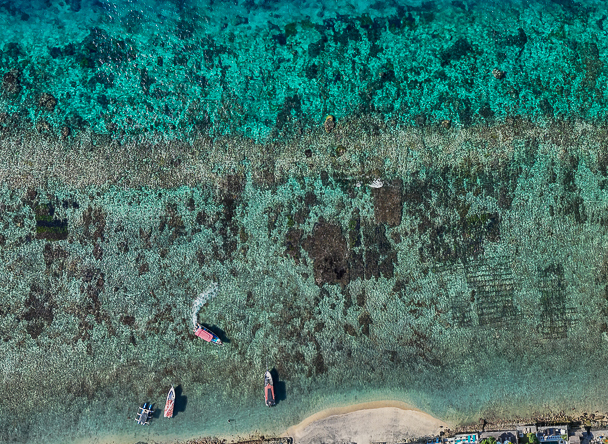
Here is a concrete example. The coast of Ped as seen in the photo above has areas where there is beach and areas where there is none. The areas with a beach correspond to the areas with a healthy reef in front, or where we’ve replanted the corals in from.
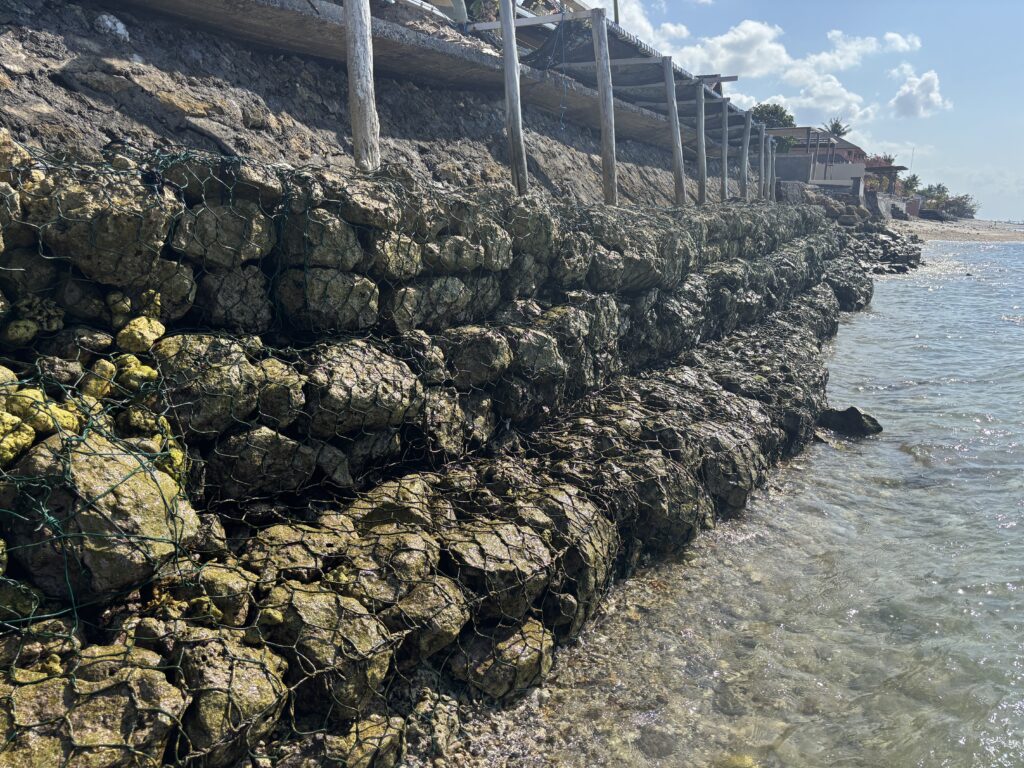
The site where we are setting up our permanent home, the Ocean Gardener Coral Lab, the corals were damaged or removed. Hence a seawall was built to bolster the shoreline. The seawall gets constantly damaged by waves. So one of our priorities is to replant the corals in front of the OG Coral Lab, so over the years, a beach will come back as the corals dampen the force of the waves and the crushed coral slowly rebuilds the beach.
The History of Our Lagoon: From Seaweed Farms to Rubble
Understanding the past is key to our ocean conservation efforts. Historically, the lagoon in front of our coral lab was extensively used for seaweed farming throughout the 1980s and 1990s. If you look at older satellite photos on Google Earth, you can see just how expansive these seaweed farms were.
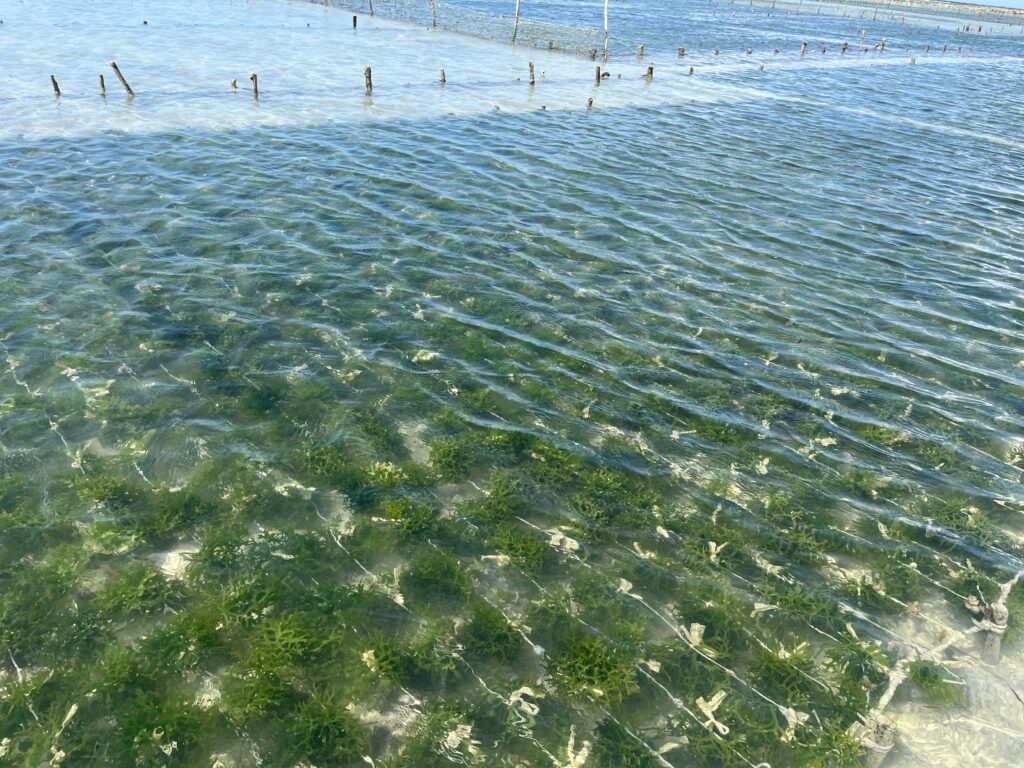
However, with the rapid development of local tourism, these seaweed farms were eventually abandoned, leaving behind a massive field of dead rubble. While the farms were active, the wooden stakes, thick ropes, and seaweed lines acted as a natural barrier, buffering the intense waves. But once the farming stopped, that crucial buffer was gone. As a result, the beach rapidly disappeared, and severe beach erosion began.
Our Coral Nurseries: Building Climate Resilience in Shallow Waters
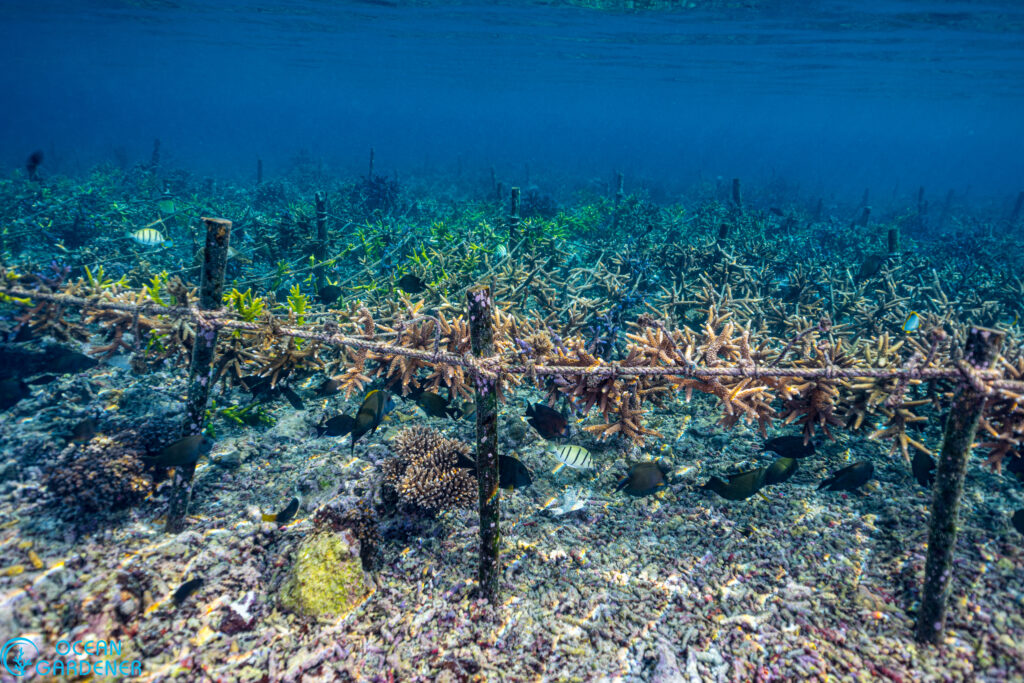
To combat this erosion and bring our beach back, our core methodology involves creating extensive coral nurseries directly in the shallow-water lagoon. In these specific zones, the water temperature is slightly higher than out on the deeper front reef. Additionally, because the water is shallower, the conditions are much brighter, exposing the fragments to more sunlight.
By cultivating corals in these slightly more stressful, high-light conditions, the corals slowly develop essential climate resilience traits. This innovative coral restoration technique ensures that when the corals are eventually transplanted to the damaged reef, they are much better equipped to survive rising ocean temperatures and ongoing climate change challenges.
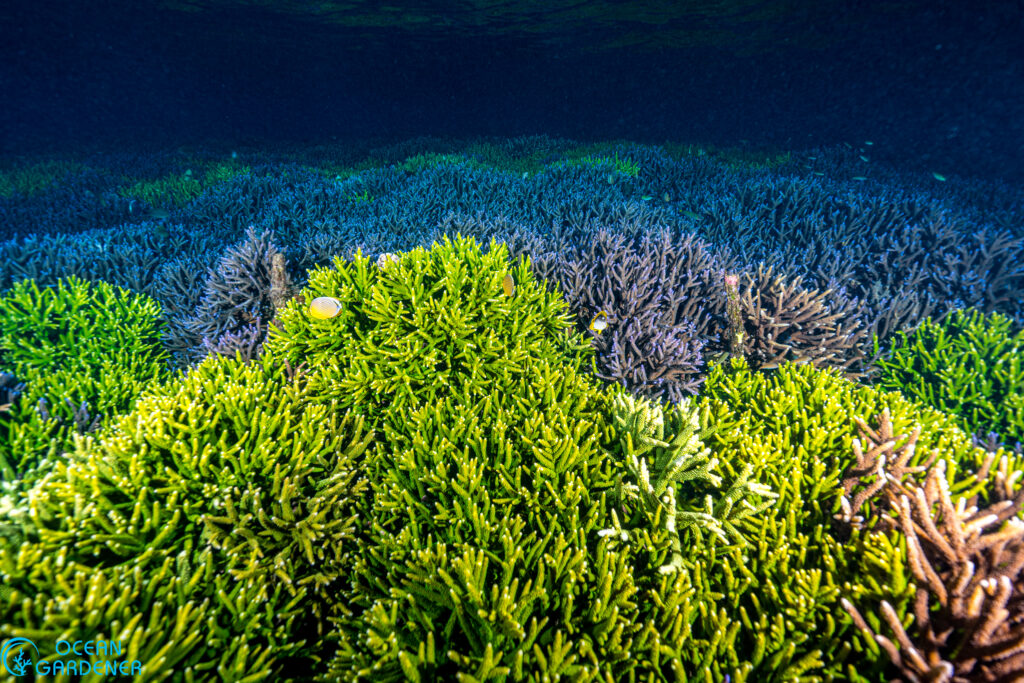
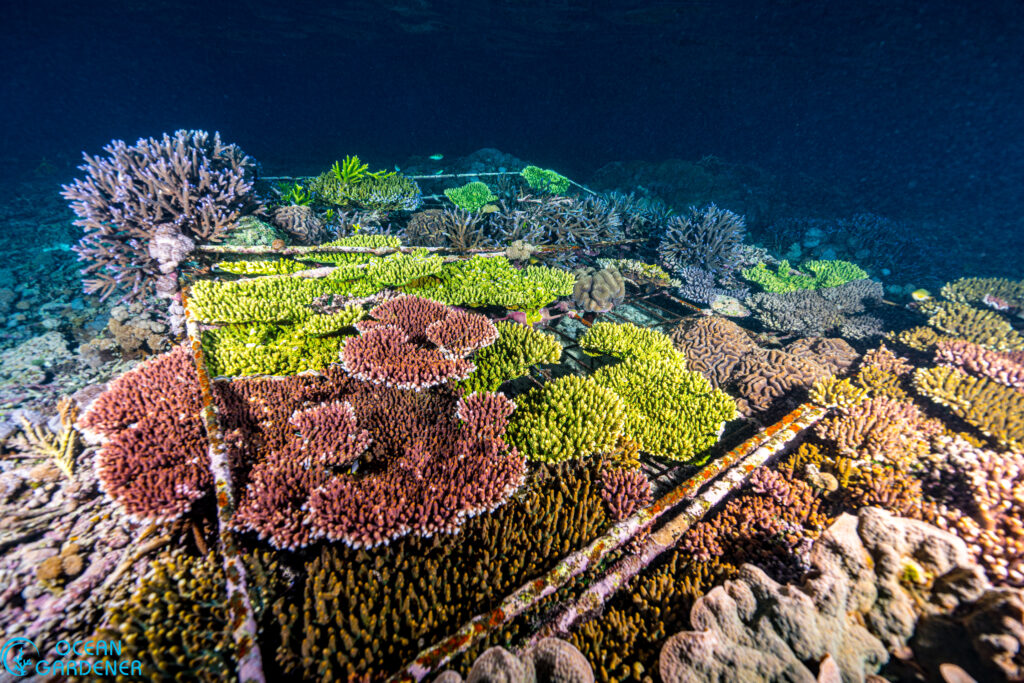
When we outplant these corals, they already possess the necessary traits to adapt to future conditions. Slowly building up the reef resilience.
How Coral Restoration Brings the Beach Back
When we plant these resilient corals back onto the degraded reef structures, they begin to grow and form complex three-dimensional habitats. This newly restored reef structure acts as a natural breakwater, significantly reducing the wave energy before it reaches the shore.
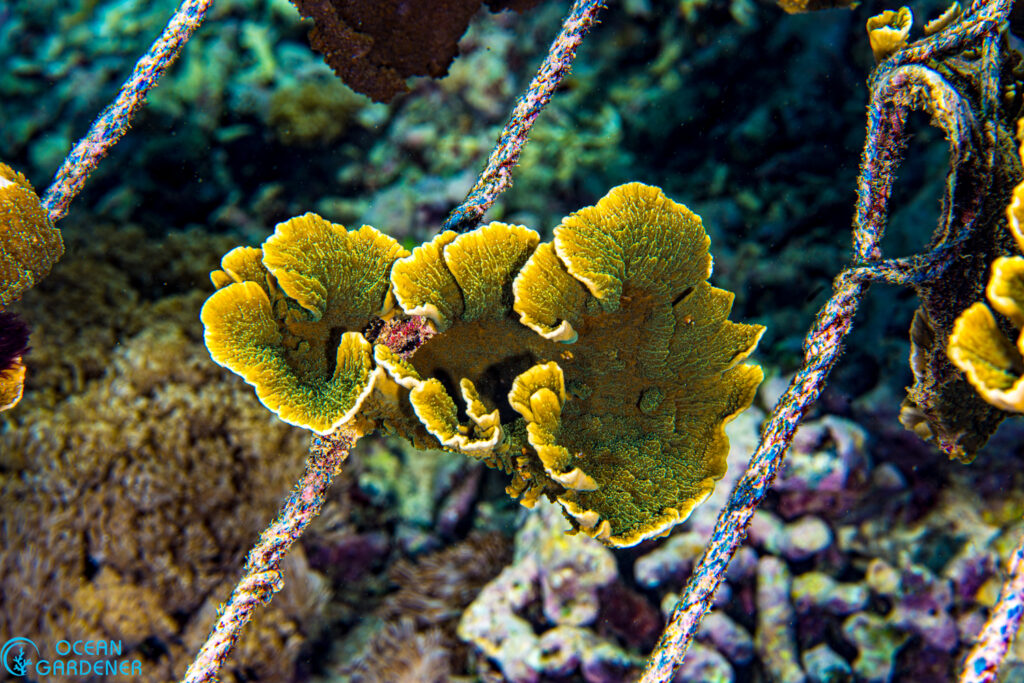
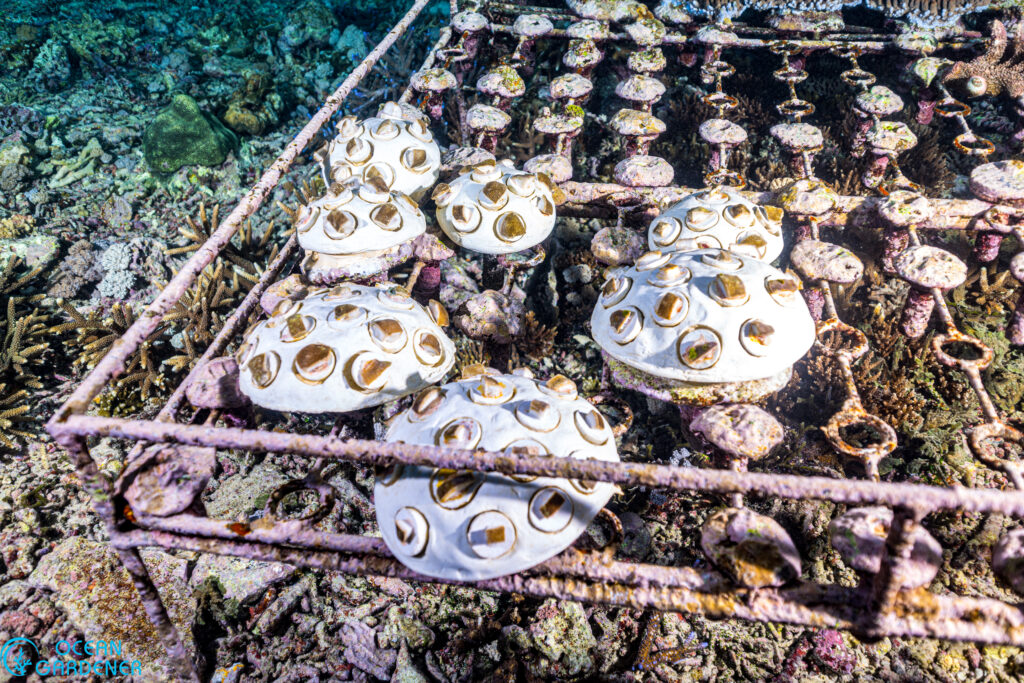
We have started to fill the lagoon behind the reef crest with new Montipora and Acropora nurseries. We are also expanding our rack nurseries to house corals with massive forms like Porites, which we are micro-fragmentation to speed up their growth. Our nurseries also host many other species of corals.
As the waves lose their destructive force, sand is allowed to settle rather than being washed away. Over time, the natural process of sand accumulation resumes, and the beach literally rebuilds itself. It’s a powerful reminder that nature has the best solutions for coastal protection, provided we give it a helping hand through active marine gardening and restoration.
Support Ocean Gardener’s Mission
This work, and the direct effect that it has on humans, is a vivid reminder about how important coral reefs are to humans. If we don’t protect our coral reefs, we will lose our beaches, mangroves… and all habitation that borders the coastline. Especially with climate change which is raising ocean levels, this work is becoming more and more crucial for the coastal communities that depend on the reefs for food and protection.
Unfortunately, most people do not understand this; they think sand comes and goes. However, it is a by-product of our actions or inactions.
Our goal is simple but ambitious: get the beach back by restoring the coral reefs that protect it. But we cannot do this alone. Whether you are a passionate diver, a marine biology student, or an ocean lover, you can help us turn the tide on coastal erosion.
Join us on our mission by taking one of our coral restoration courses, donating to help fund our restoration work, or adopting a coral to follow along your own coral’s growth while supporting more replanting. Together, we can ensure that our coastlines remain protected for generations to come.