
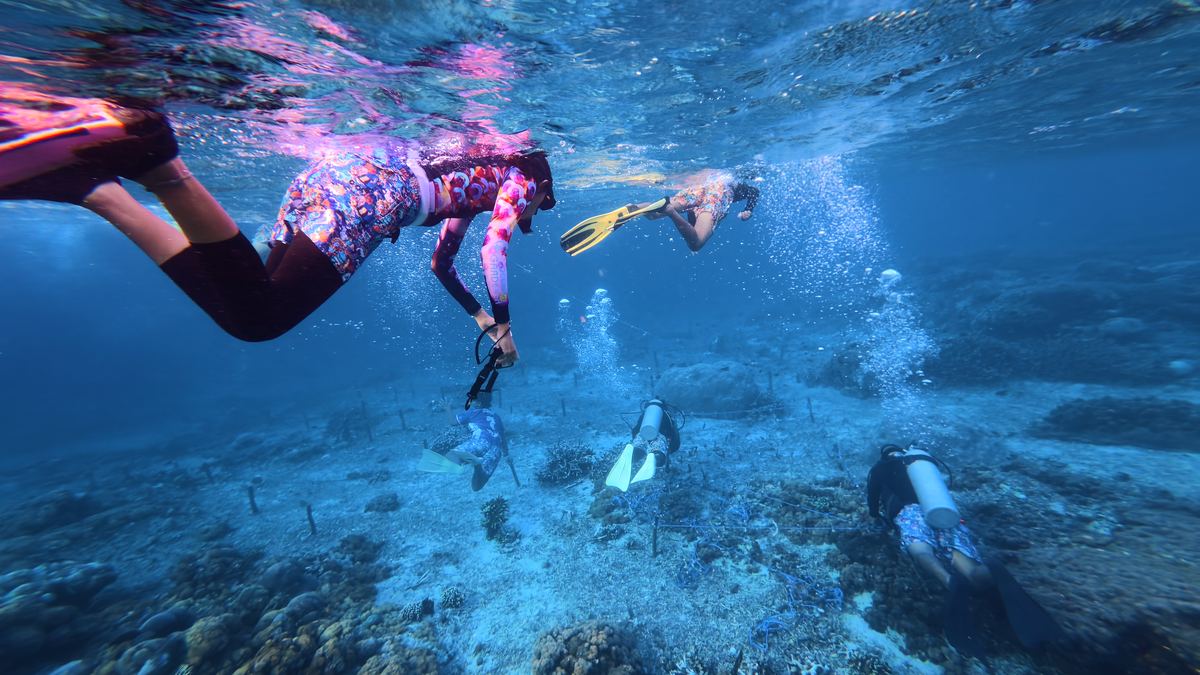
One of the most common assumptions we run into is that coral restoration work is only for certified divers. It’s an easy assumption to make — most conservation diving content is aimed at scuba divers, and a lot of the more technical restoration work does require a certification. But it’s not the whole picture, and it stops a lot of genuinely interested people from ever getting in the water. Here’s what each option actually lets you do.
What snorkelers can do
Snorkelers aren’t just observing from the surface — they get in the water at the nursery, learn how coral restoration actually works, and plant their own coral fragment onto the reef structure themselves. It’s a great way for beginners to get a real feel for the reef and the work, without needing any prior diving experience.
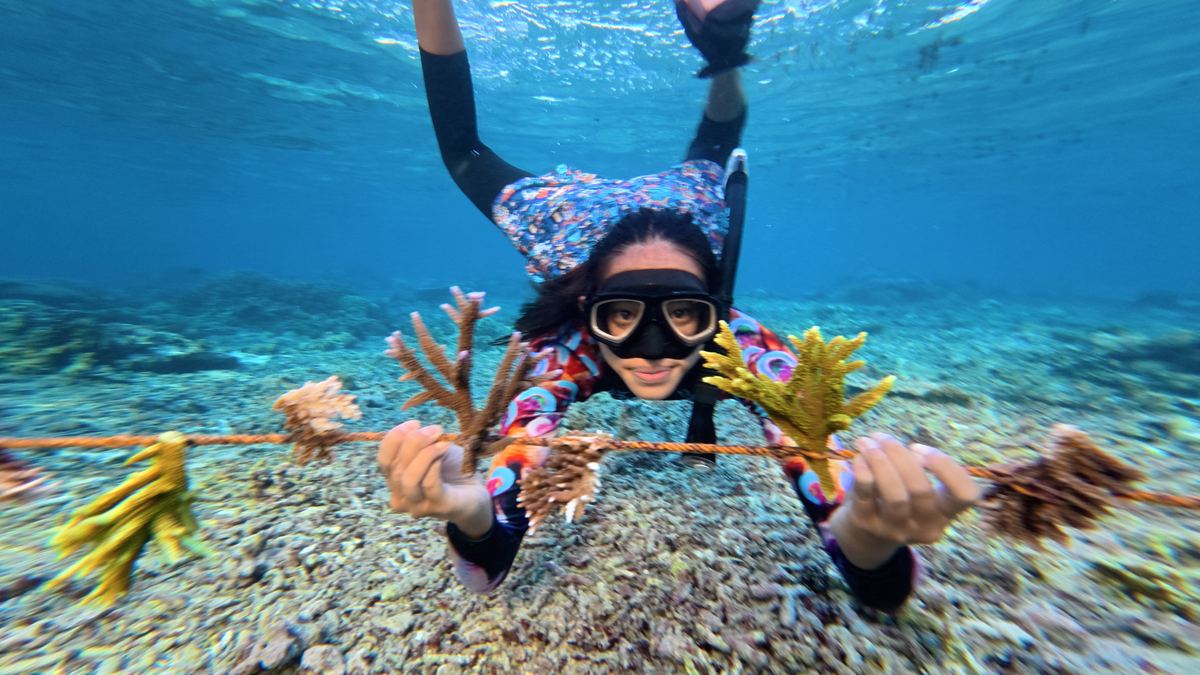
Reefs are often shallow enough that meaningful restoration work — and even mapping shallow reef sites — can be done entirely on snorkel, without ever needing a tank. That also makes it the more cost-effective way to get involved: no tank rental, no fuel and compressor costs, no boat needed for every session.
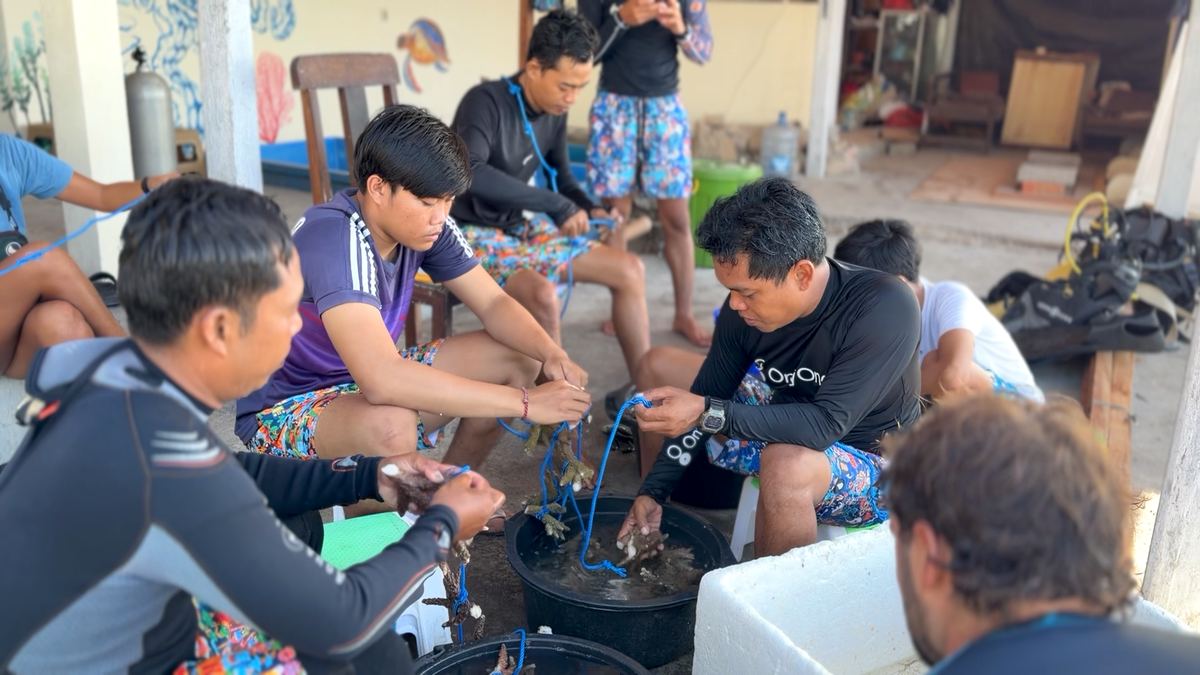
That low barrier to entry matters most in our community work here in Indonesia. Snorkeling keeps restoration work accessible to local communities who don’t have easy access to dive gear or certification — it’s how we get wider participation. In a lot of our community plantings, local fishermen’s kids snorkel down to harvest coral fragments and bring them ashore, where the wider community helps string them onto lines, and our more experienced team members tie them onto the wooden nursery stakes. Everyone has a role, regardless of whether they dive.
At our shallow, shore-accessible sites in Amed and Nusa Penida, the nursery structures are placed specifically within comfortable snorkeling depth — calm water, easy shore access, and real hands-on planting without needing a tank.
If your goal is a genuine, hands-on introduction to coral restoration without committing to a dive certification first, this is a real way to do that — not a watered-down version of the “real” experience.
One thing snorkelers should plan for that divers don’t worry about as much: you’re spending your whole session at the surface, in direct sun, on exposed skin. Our guide on reef-safe sunscreen (and what to use instead) is worth a read before your tour.
What divers can add on top of that
Diving opens up restoration sites and tasks that depth or complexity puts out of snorkeling range. Being on scuba means you can hold a position at depth for extended periods, which is what a lot of the more technical restoration work actually requires — not just reaching a deeper nursery, but staying there long enough to do the job properly.
If you’re not yet certified and want to get into reef restoration, the standard path is an SSI or PADI Open Water Diver certification through any local dive operator, plus a bit of time in the water afterward to build comfort — our own Intro to Coral Restoration course requires SSI/PADI Open Water certification and a minimum of 10 logged dives before you join, since the work itself assumes you’re already comfortable and stable underwater.
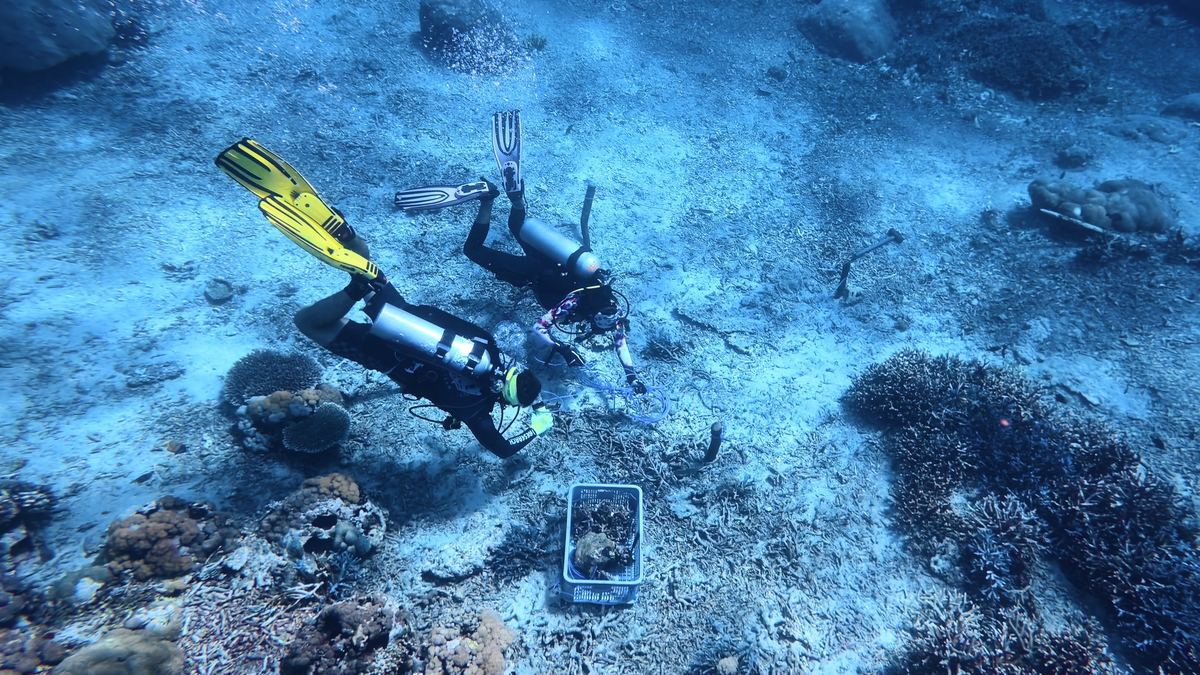
With that foundation, diving is what makes deeper nursery structures possible, along with more involved outplanting onto reef structures that need close, controlled positioning. It’s also what ongoing maintenance work requires — algae removal, and clearing coral-eating pests like drupella snails and crown-of-thorns starfish — all of which take time hovering in place to do properly rather than a quick pass. On deeper reefs, diving is also what makes in-situ fragging possible, and techniques like substrate stabilization at deeper coral rubble sites simply require you to be able to stay down.
If you’re new to scuba but want to get into reef restoration, our 3-day Intro to Coral Restoration course in Amed, East Bali or Ped, Nusa Penida is the right starting point. For the more advanced techniques above — the kind that make sense if you’re building toward a career in reef conservation — the Full Coral Restoration Certification teaches the full range of restoration methodology rather than a single planting session.
The honest tradeoffs
Snorkeling is:
- Faster to start — no certification, course, or gear familiarity required beforehand
- Lower cost and lower time commitment
- Genuinely hands-on, not just observational, at our shallow sites
- Limited to shallower nursery locations and simpler tasks
Diving is:
- Access to a wider range of sites, depths, and restoration tasks
- A better fit if you want ongoing, repeatable involvement rather than a single experience
- An upfront investment of time and cost if you’re not already certified
Neither is a lesser version of the other — they’re suited to different starting points and different goals.
If you’re trying to decide
Ask yourself what you actually want out of the experience. If you want a meaningful, low-barrier way to understand coral restoration and physically plant a coral fragment during a trip to Bali, a snorkel tour genuinely delivers that in an afternoon. If you’re looking for something closer to ongoing skill-building — multi-day involvement, structured learning, or a stepping stone toward becoming a long-term volunteer or intern — diving (and our courses) is where that path opens up.
You can also do both
A lot of people who come through our snorkel tours end up getting certified specifically because the experience made them want more access. If that’s you, there’s no need to treat it as a one-or-the-other decision — start with a snorkel-accessible coral restoration tour, see how it feels to plant your first fragment, and decide from there whether you want to go deeper, literally. And whichever you choose, our guide on reef-safe diving and snorkeling habits covers what to know before you get in the water.