
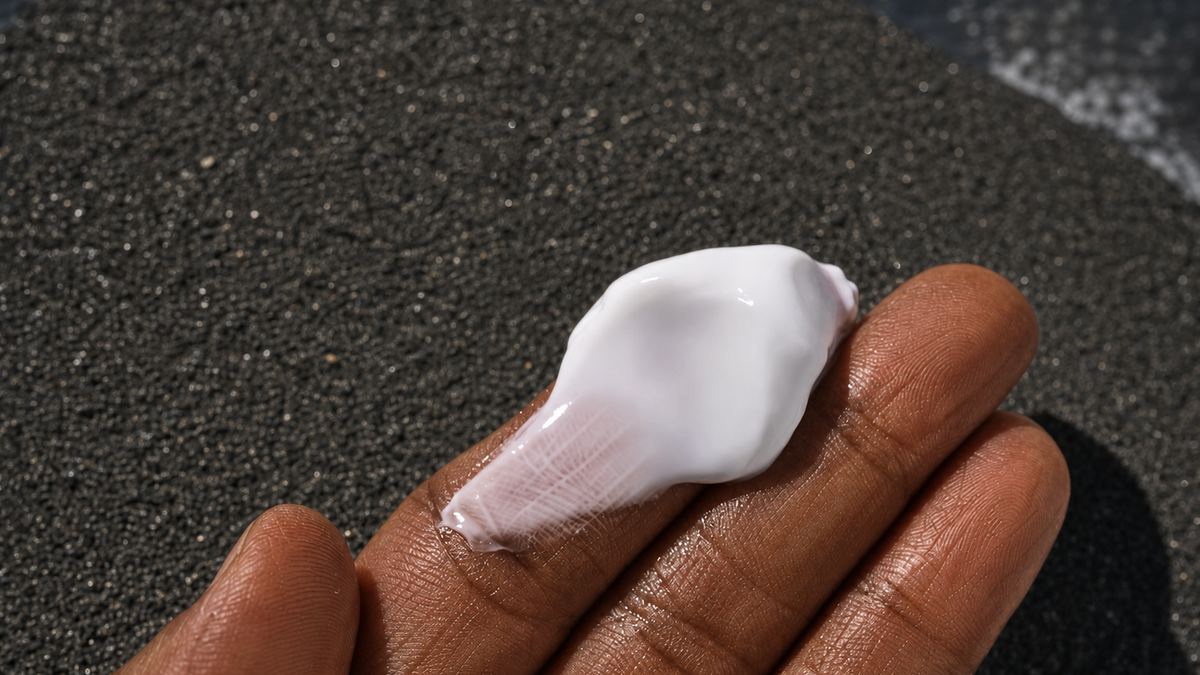
Most people getting ready for a day of snorkeling or diving have never questioned their sunscreen. It’s the one part of a tropical vacation that feels completely separate from reef conservation — you put it on before you even get in the water, so how could it possibly reach the coral you’re about to swim over? Whether you’re a certified diver, a first-time snorkeler on a reef tour, or just someone floating face-down with a mask on to see the colorful fish for an afternoon, the answer is the same: it reaches the reef constantly, and for a lot of popular sunscreens, what it does when it gets there is genuinely damaging.
You don’t need to be a serious diver for this to matter. If a tropical reef trip — snorkeling over a shallow reef, a beginner dive, a boat trip to see colorful fish up close — is anywhere on your itinerary, this is worth five minutes before you pack.
What actually happens when sunscreen hits a reef
Every year, an estimated 6,000 to 14,000 tons of sunscreen wash off swimmers and divers into reef ecosystems worldwide, concentrated heavily in popular dive and snorkel destinations. Two chemical UV filters in particular — oxybenzone and octinoxate — have been shown in peer-reviewed research to damage coral even at extremely low concentrations, contributing to bleaching, DNA damage, and deformities in coral larvae.
Bali alone gives a sense of the scale involved: nearly 6.95 million foreign tourists arrived in Bali in 2025 according to Indonesia’s official statistics agency (BPS), on top of millions more domestic visitors, with a large share of that traffic drawn specifically by beaches, snorkeling, and diving. Even a fraction of those visitors applying sunscreen before a swim adds up to a real, continuous input into the same water the reefs are trying to grow in — this is exactly the kind of destination the global sunscreen-runoff estimate above is describing, not an abstract worldwide average.
This isn’t a fringe concern: it’s serious enough that Hawaii, Key West, and Palau have all passed outright bans on selling sunscreens containing these ingredients, specifically to protect their reef tourism economies. Sadly, Bali hasn’t banned it yet, but we do advise our visitors at our coral nurseries in Amed and Nusa Penida to avoid using them.
Why this connects to how coral actually feeds
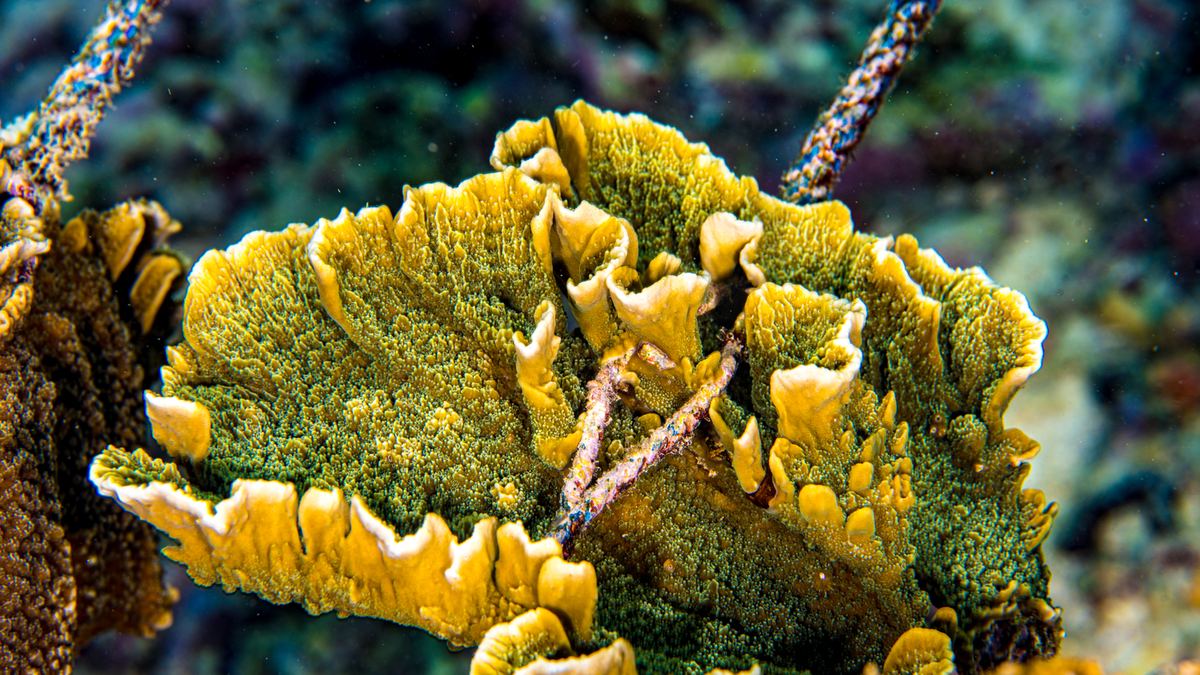
Coral actually feeds off sunlight. Each coral polyp hosts microscopic algae called zooxanthellae living inside its tissue, and those algae photosynthesize — using sunlight to produce sugars that the coral then feeds on, supplying up to 90% of a coral’s energy needs.
That’s exactly why sunscreen is a bigger threat than it sounds. Anything that blocks light from reaching that algae, or disrupts the photosynthesis process itself, threatens the coral’s actual food supply.
Chemical filters like oxybenzone also react under UV light and generate reactive byproducts that damage the zooxanthellae directly, and enough stress causes the coral to expel its own algae entirely. That expulsion is what bleaching actually is: a coral starving because it just lost its food source.
Anything in the water that interferes with light or damages that algae, chemically or physically, is interfering with coral eating.
The problem with the label “reef-safe”
Here’s what most people don’t realize: “reef-safe” and “reef-friendly” are marketing terms, not regulated claims. In most countries, including the US, there’s no legal standard a sunscreen has to meet to put “reef-safe” on the bottle. A sunscreen can carry that label and still contain ingredients under active scientific review for reef toxicity. That means the label alone isn’t enough — you have to actually check the ingredient list.
Ingredients to avoid
If you want a sunscreen that’s genuinely lower-impact on coral, skip anything containing:
- Oxybenzone (benzophenone-3)
- Octinoxate (ethylhexyl methoxycinnamate)
- Octocrylene
- Homosalate
- 4-methylbenzylidene camphor
These are the chemical UV filters most consistently flagged in coral toxicity research, and they’re exactly what jurisdictions like Palau have banned outright.
Mineral sunscreens aren’t automatically off the hook either — it comes down to particle size. Zinc oxide, the main mineral UV filter, is sold in both nano and non-nano formulations, and they behave completely differently in seawater:
- Nano zinc oxide (particles below 100 nanometers) is small enough for coral polyps to ingest directly, and dissolves in seawater far more readily, releasing zinc ions that are toxic to coral tissue and can trigger the same bleaching response as chemical filters. Some studies have documented visible coral stress within 48 hours of exposure at concentrations found near popular reef destinations. Avoid it.
- Non-nano zinc oxide (particles roughly 100 nanometers or larger) doesn’t dissolve readily in seawater and is too large for coral cells to absorb — it mostly settles out rather than being taken up by marine life. This is the version to look for, if you’re using a mineral sunscreen at all.
The catch: many sunscreen labels say “mineral” or even “reef-safe” without specifying particle size at all, since there’s currently no requirement to disclose it. Look specifically for “non-nano” printed on the active ingredients panel — right now that’s the most reliable signal available.
What to use instead
The single most effective option isn’t a sunscreen at all — it’s not putting anything on your skin in the first place. Covering up with a rash guard or a long-sleeve dive shirt means zero product in the water, full-dive sun protection with no reapplication, and one less thing to think about before you get in. A lot of rash guards now come with a built-in hood to cover the neck and ears too, which is usually the area people forget to protect. Long spandex dive leggings do the same job for your legs. Cover torso, arms, legs, and neck this way, and sunscreen only has to handle the small amount of skin that’s still exposed — hands, feet, face.

If you have to use sunscreen on that remaining skin, reiterate: reach for a non-nano zinc oxide mineral sunscreen over a chemical one. And whichever you use:
- Apply it at least 15-20 minutes before you get in the water, so it has time to properly absorb into skin rather than immediately rinsing off
- Reserve it for exposed skin you genuinely can’t cover with a rash guard, hood, or dive leggings
- Skip spray sunscreens regardless of ingredients, since a large percentage of the product ends up on sand and in water rather than on skin
Why this matters even more here in the Coral Triangle
Indonesia sits inside the Coral Triangle, the most biodiverse marine region on Earth — a stretch of ocean spanning Indonesia, Malaysia, the Philippines, Papua New Guinea, the Solomon Islands, and Timor-Leste that holds roughly 76% of the world’s known coral species and more than a third of the world’s reef fish species. Bali’s reefs are part of that same system, which is exactly why a day of snorkeling or diving here shows you such a dense concentration of coral and colorful fish compared to most other places you could go underwater — it’s not a coincidence, it’s geography. That density cuts both ways, though: it also means the reefs here have more to lose, and more riding on every visitor doing their small part to protect them.
Bali’s reefs are already under real pressure — from warming water, overtourism, and coastal development with inadequate sewage treatment — before a single tourist puts on sunscreen. Every bit of avoidable chemical stress removed from that equation gives coral a slightly better chance against the pressures that are much harder to control.
It’s a small, low-effort habit change whether you’re a serious diver or just here for a vacation snorkel trip, and a meaningful one at the scale of thousands of visitors a season moving through one of the richest reef systems in the world.
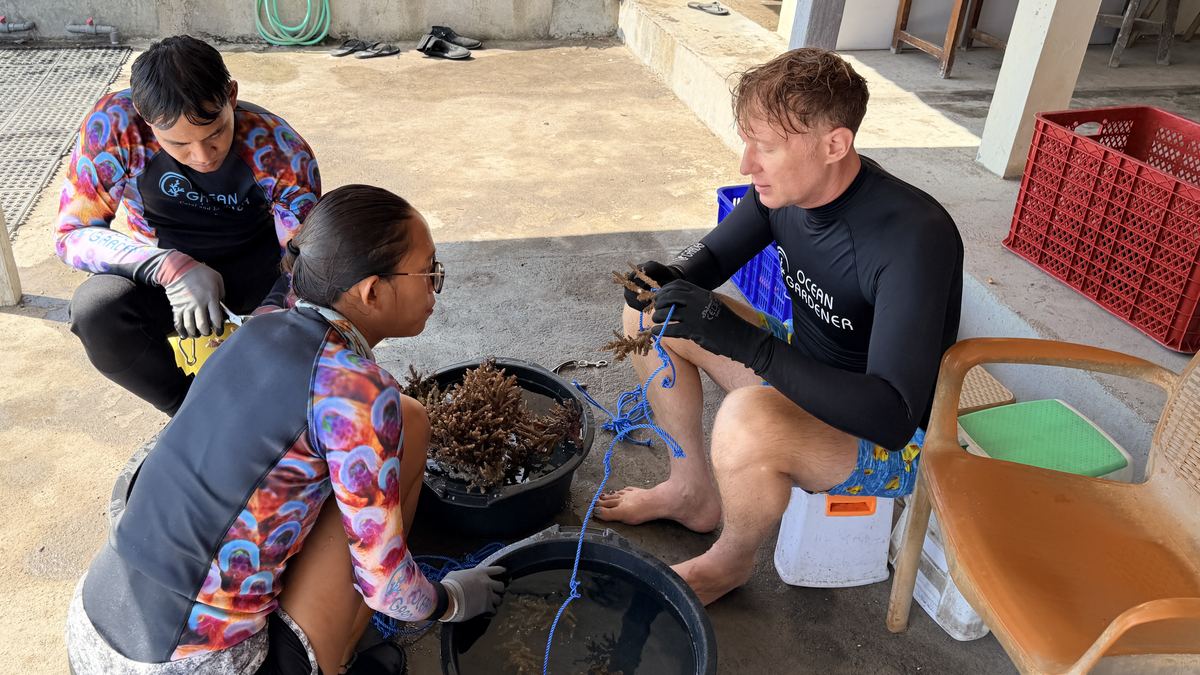
Choosing the right sunscreen is one habit among several that add up to genuinely reef-safe diving — see our guide on 10 reef-safe diving habits every diver should practice for the rest. And whether you’re a certified diver or you’ve never used a tank in your life, our coral restoration site visits let you get in the water at one of the most biodiverse reef systems on the planet and actually plant coral — no dive certification required, snorkelers welcome. Not sure which fits your trip? Our guide on snorkeling vs. diving for coral restoration breaks down what each option actually lets you do.