
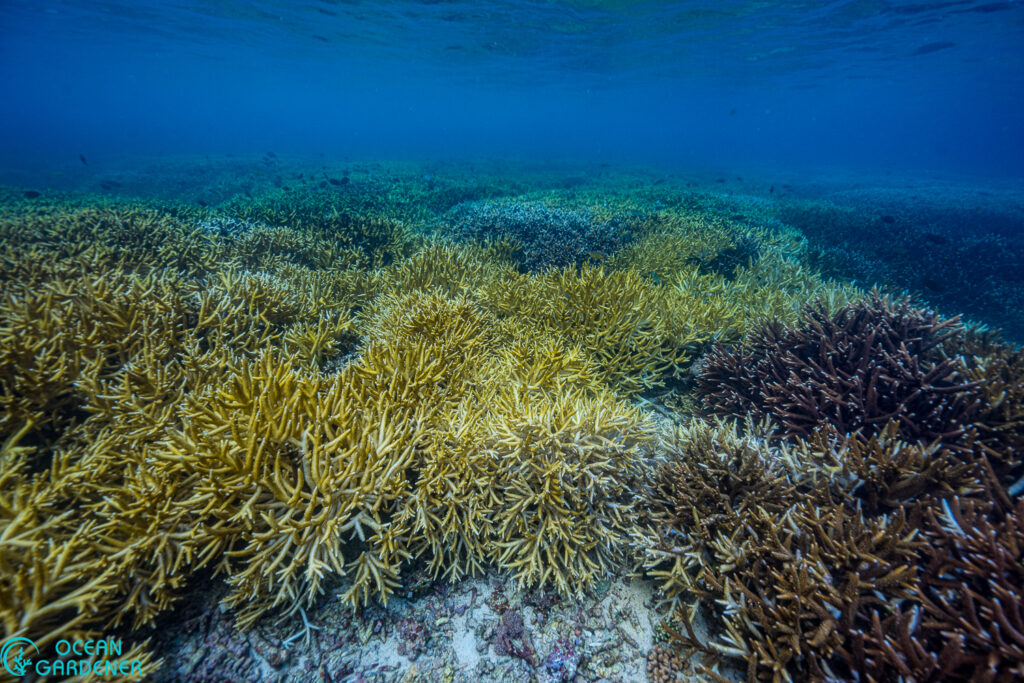
As coral reef practitioners, we have been preparing for the Giga El Niño (the “super El Niño” of 2026) for a few months already. We expect the big troubles to reach us in the next few months. But a few months ahead, we unfortunately can already feel its impact.
Of course, you’re not going to read that in the mainstream media. It’s business as usual there.
What Is El Niño, and How Strong Is This One?
Quick refresher: El Niño is a natural climate pattern. The trade winds across the Pacific weaken, or even reverse, and the huge mass of warm water that normally sits near Indonesia slides east toward the Americas. It happens every few years… but this one is not a normal one.
In its 12 November 2026 update, NOAA’s Climate Prediction Center reported that El Niño is still strengthening, with the Niño 3.4 index at 2.5°C above average and a greater than 79% chance of a strong to very strong event lasting through January–March 2027. That puts it among the strongest El Niños recorded since 1950. You can follow the latest status on NOAA Coral Reef Watch’s El Niño page.
The large mass of warm water is still in the Eastern Pacific, over 7000 km from us. You can see it for yourself on the NOAA Coral Reef Watch bleaching alert map. But you can already sense the effect and the damage it generates.
The Water Is About 1 Foot Higher on the Western Pacific Coast of America.
Maybe you’ve seen in the news that large waves flooded some coastal communities in California. Well, because of all this mass of warm water in the central and eastern Pacific, the water on the West coast of the Americas is a foot higher. On top of it, very warm surface water evaporates and creates bigger storms. Then follows swarms of destruction on the coast.
These are all consequences of human-induced climate change.
We’ve Been Getting Unusually Very Low Tides in the Coral Triangle
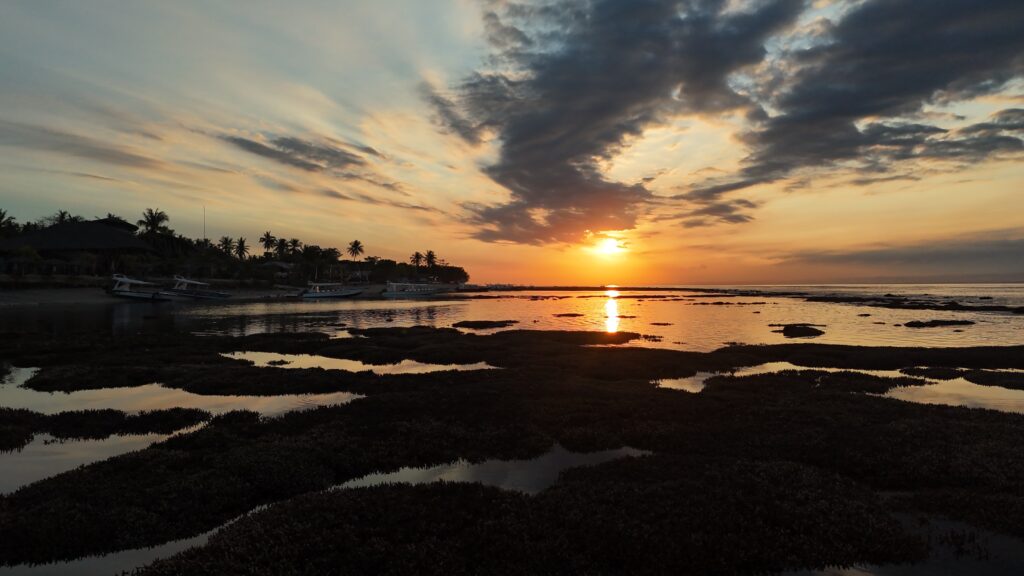
But these crazy conditions also have consequences on the other side of the Pacific. The trade winds that usually blow west are now blowing east. Instead of blowing warm water toward Indonesia, it blows warm water towards America, thus pulling water away from the Coral Triangle.
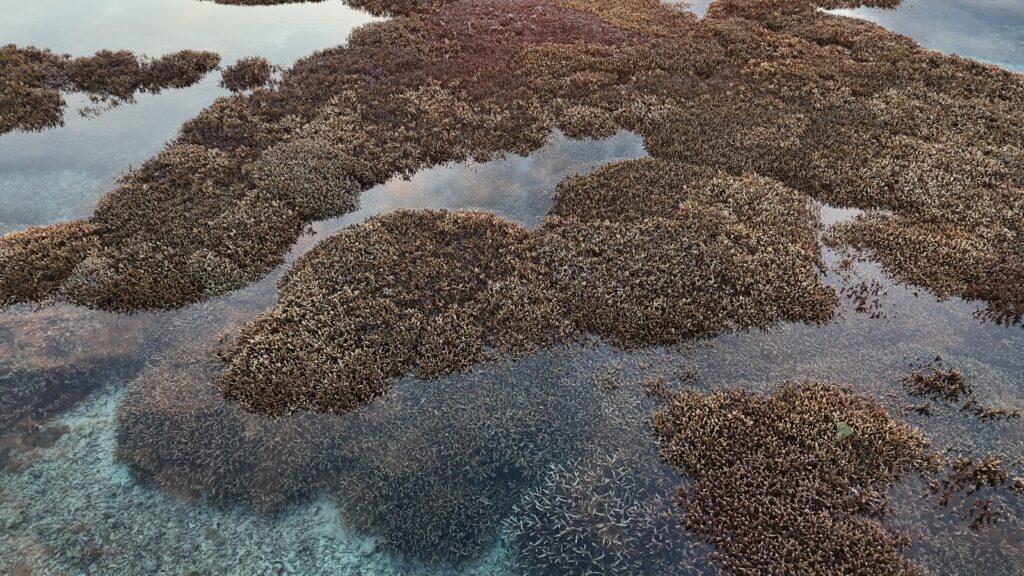
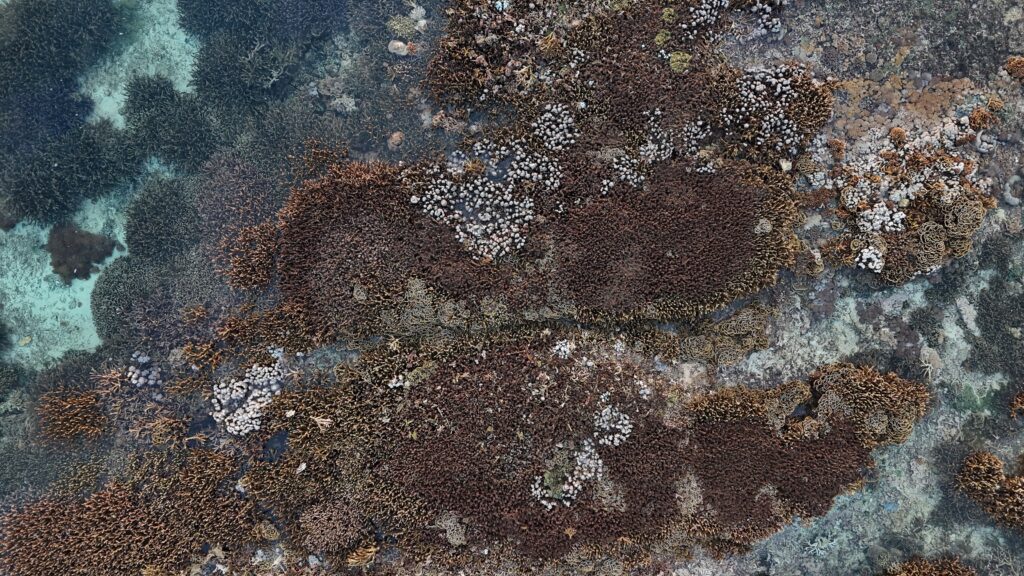
The consequence is extremely low tides, which took a toll on the shallow coral reefs. Being exposed to air and tropical sun for many hours every day, for months, stressed them and killed many of them.
And we’ve seen this before. During the last super El Niño in 2015–2016, scientists documented the same thing across Indonesia: sea level dropped to its lowest in 12 years, and shallow reef flats exposed at low tide suffered heavy mortality, up to 85% on some reef flats at Bunaken in North Sulawesi, months before the first heat bleaching was even reported (Ampou et al., 2017, Biogeosciences).
The Indonesia Throughflow Has Considerably Slowed Down
For over a month now, we have noticed very unusual current conditions at our Nusa Penida Coral Reef Restoration Site. One of the beneficial environmental characteristics of our site is this intense, almost never-stopping laminar flow that brings food, nutrients, oxygen, minerals… and flushes toxins, mucus, oxidative agents… This very positive, strong current has almost stopped. This makes it very enjoyable for diving and working underwater, but unfortunately it has a very negative effect on corals; they are starved and unable to flush toxins away.
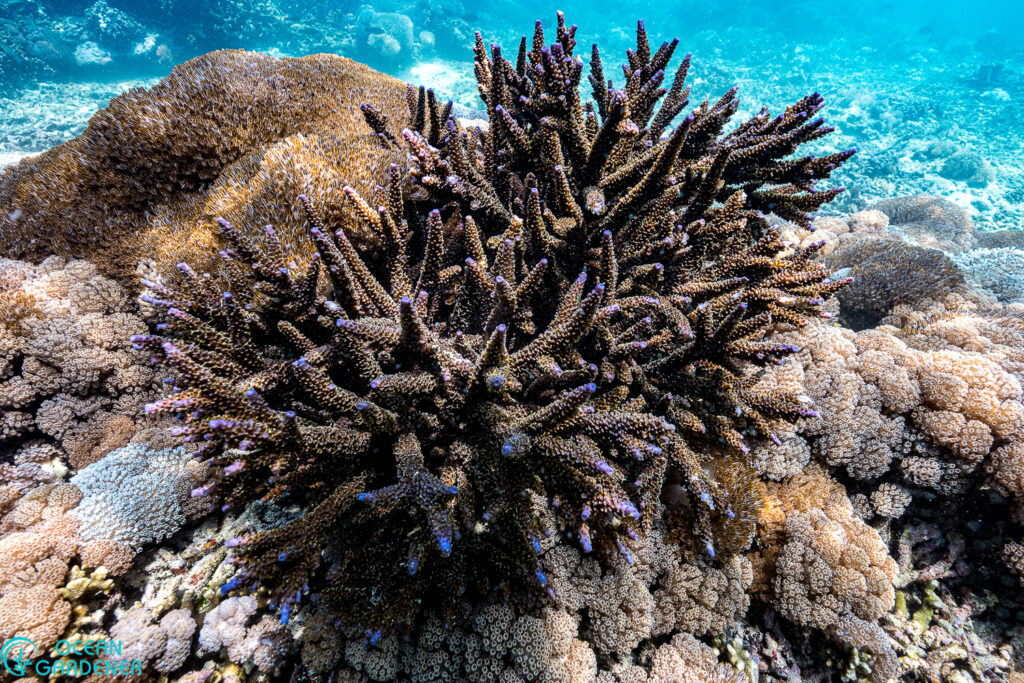
Our Oldest Thermo-Resilient Nursery Experienced 90% Mortality
Typically, Nusa Penida’s reefs are protected by the strong currents that keep flushing away coastal pollution from the increased urbanization on the coasts of Nusa Penida.
With the lack of currents, when the rainy season started, the rain pushed sewage water out of the ground and into a lagoon already filled with stressed corals and lower than normal water levels. The low oxygen levels and very limited flow caused dramatic consequences on all the old colonies inside the lagoon that were breaching the surface.
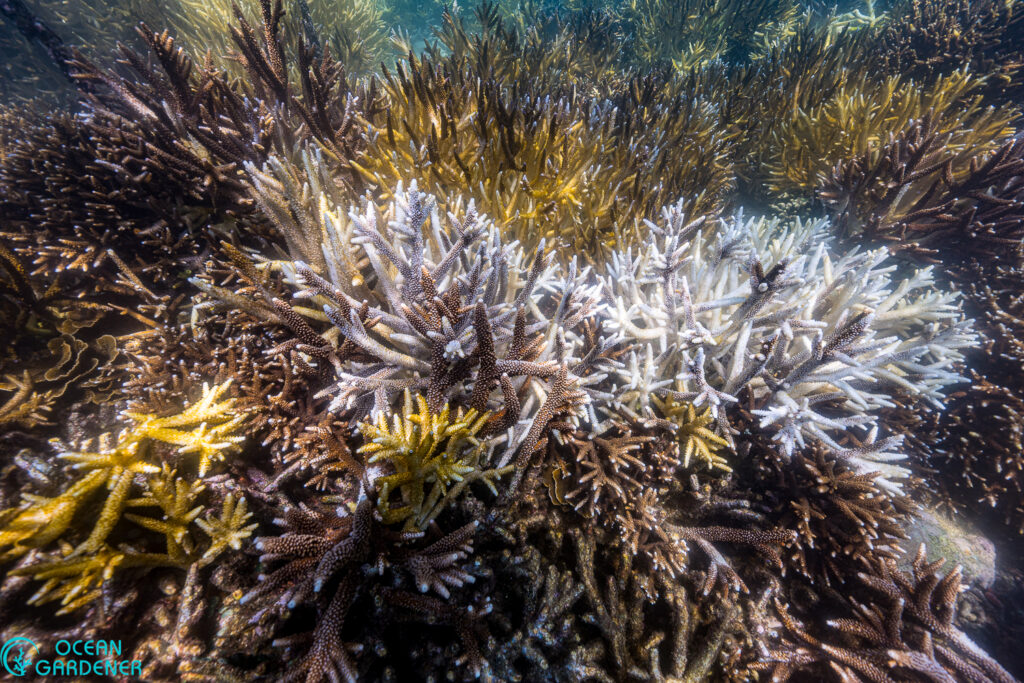
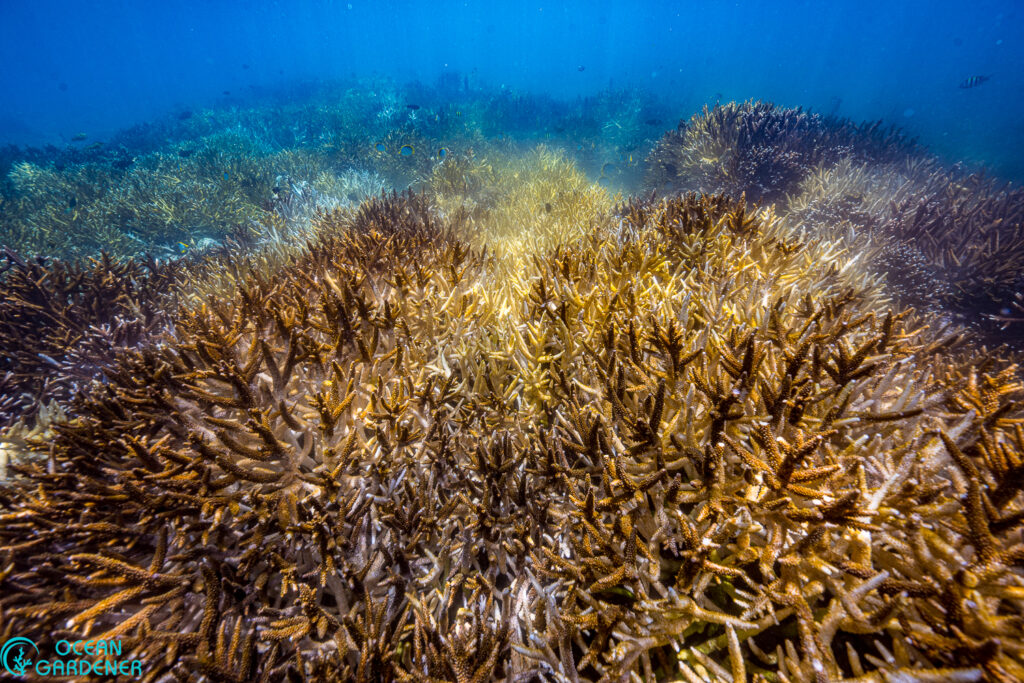
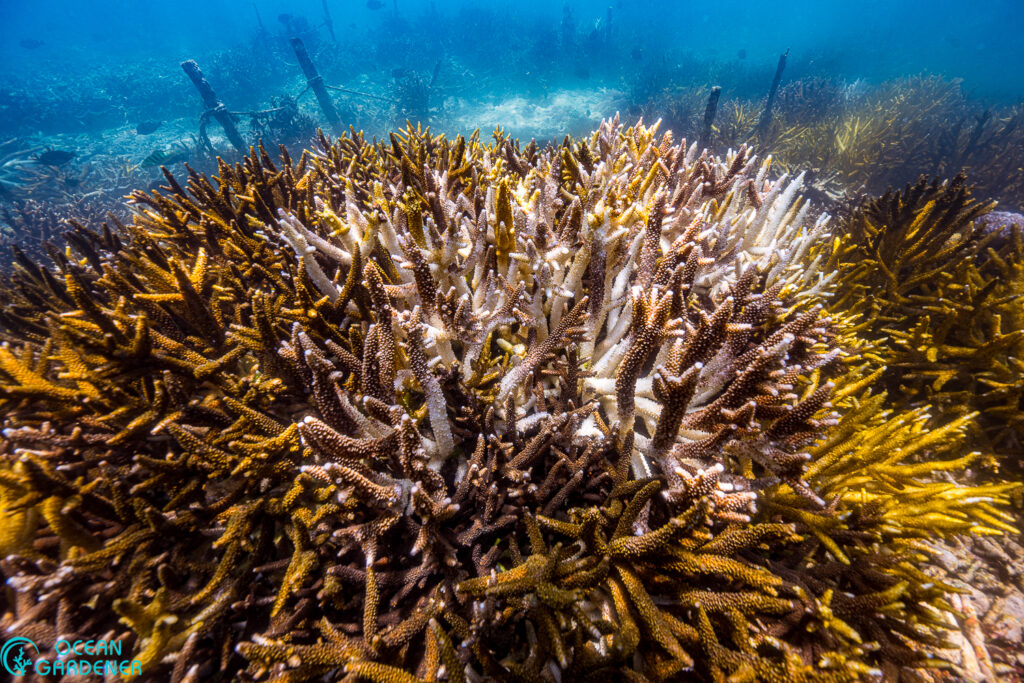
What you see in these photos is Rapid Tissue Necrosis (RTN): the living tissue dies and peels off the skeleton in a matter of hours or days, leaving white skeleton behind. It is usually triggered by stress and poor water quality, often with bacterial infection on top, and once it starts on a colony it spreads fast. That’s how so many of our old colonies went at once.
Outplants and Younger Nurseries Survived
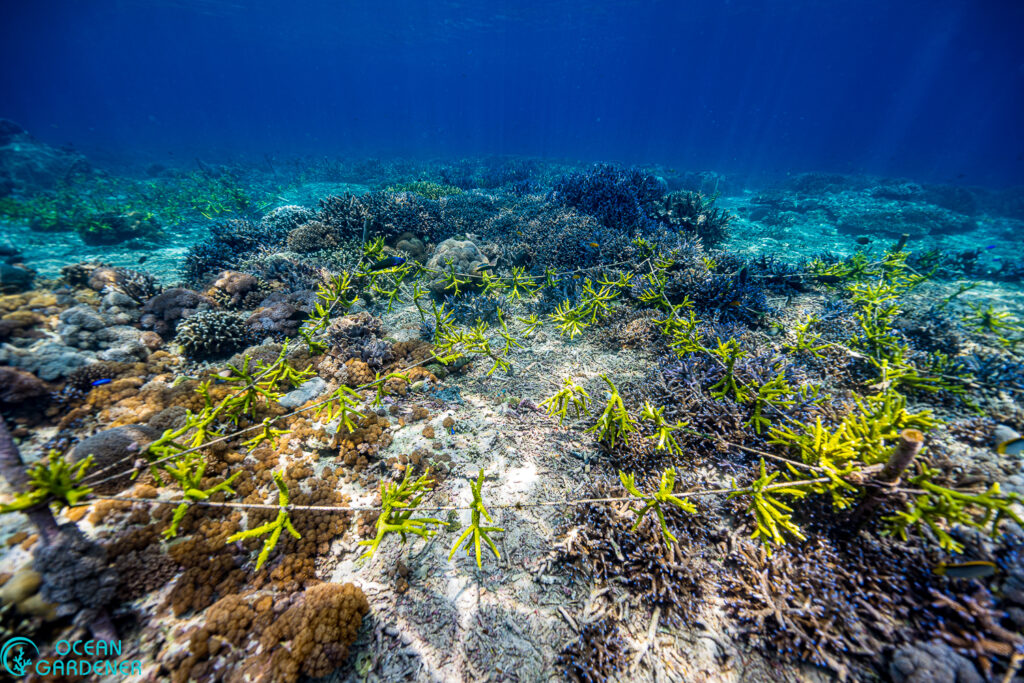
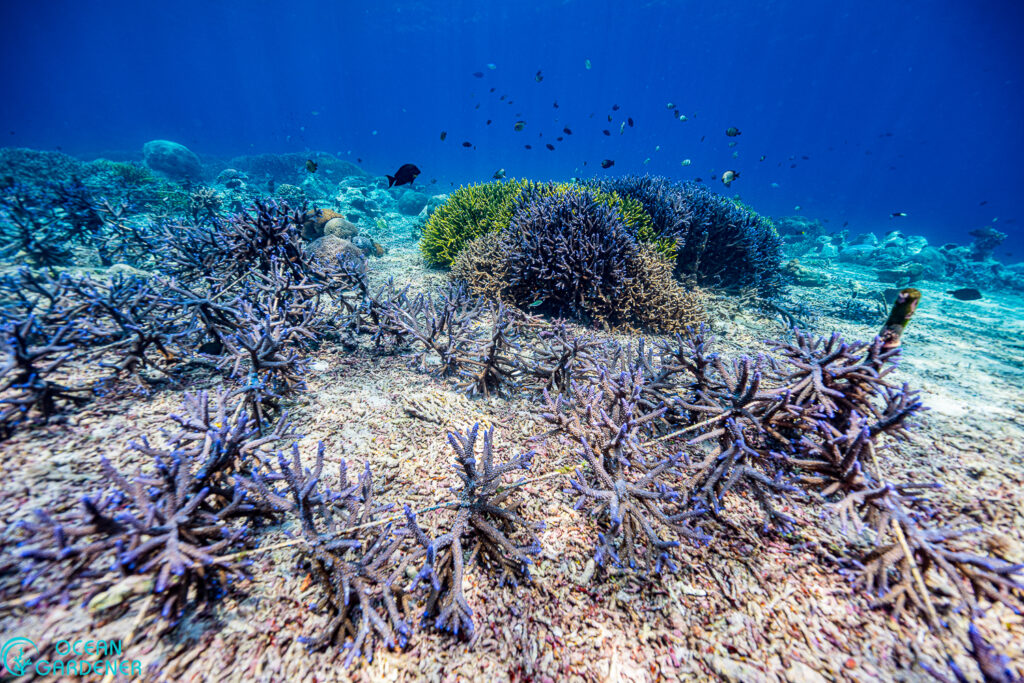
The good news is our less than 3-year-old nurseries and our outplanting coral reef restoration sites outside the lagoon were unharmed, likely due to the depth and volume of water that is constantly exchanging outside the reef crest.
So Is This Coral Bleaching?
Not yet, not really. Coral bleaching is what happens when the water gets too hot for too long: corals expel the tiny algae living in their tissue (the zooxanthellae) that feed them and give them their colour. The coral turns white. A bleached coral isn’t dead… but it’s starving, and if the heat doesn’t let go, it will die.
What we’re seeing right now is different. Our corals are being killed by air, by stagnant water, by sewage… before the heat even gets here. And that’s what worries us most.
What Happens When the Heat Arrives?
When the warm water does reach us, we’ll be facing classic heat bleaching on top of everything else. NOAA tracks this heat stress in “Degree Heating Weeks”: how far above the normal summer maximum the water has been, added up over 12 weeks. Around 4 Degree Heating Weeks, significant bleaching is expected. From 8 and above, widespread bleaching and mortality. In the last super El Niño, the first bleaching in Indonesia was reported in April 2016, as the event was already fading. So the coming months are the ones to watch.
Corals that have already been weakened by months of low tides, weak currents and pollution have very little left to face that.
The Point We’re Trying to Make Is:
El Niño doesn’t only affect land… it doesn’t only affect the part of the world with warm water… it affects all of us, and nobody is protected.
Then, no matter how we manage to create corals that will survive warmer conditions, they will not survive pollution, low currents, low tides, diseases… And we don’t have time to create super corals that will survive all the curveballs we send at them.
How You Can Help
We’ll keep sharing what we see on our reefs over the coming months. In the meantime, here’s how you can get involved:
- Support our work by adopting a coral or donate
- Read what we can do in case of coral bleaching, and learn more about the other threats to corals.
- See how we’re testing four coral restoration methods side by side in Nusa Penida.
- If you want to get hands on with coral reef restoration, join one of our coral restoration courses or volunteer.