
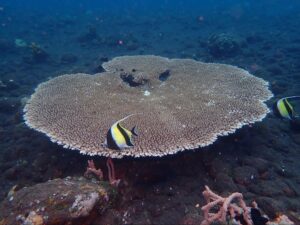
Latest Acropora ID Diver Course May 2026
In May 2026, Ocean Gardener hosted an intensive two-week Acropora Course, bringing together passionate divers from Lombok, Pemuteran, and our own team. Through 14 dives and extensive field study across Nusa Penida and Bali, participants observed 70% of the 99 Acropora species studied, gaining deep insights into species-specific restoration. Are you ready to become a coral expert? Join our next cohort and take your restoration skills to the next level.
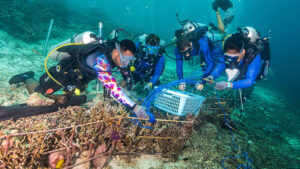
Bringing Coral Restoration Home: Training Indonesia’s Coastal Communities to Restore Their Own Reefs
Ocean Gardener is launching a Coral Restoration Training Program funded by the TFCCA Grant Program, teaching coastal communities across Indonesia—in Bahasa Indonesia—how to restore their own coral reefs.
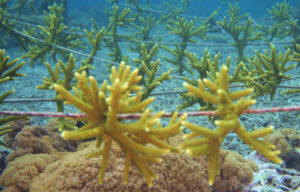
The story of our Ped, Nusa Penida, coral restoration site
James shares the incredible transformation of our Ped, Nusa Penida site. From bare rubble to 52% coral cover, he explores how simple, community-led methods are bringing Bali’s reefs back to life. Witness the power of restoration!
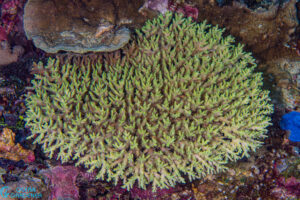
Acropora delsawii, an iconic coral from Indonesia
Our founder, Vincent Chalias, dives into the story of Acropora delsawii. Named after conservationist Des Alwi, this “spiny pillow” coral is a true icon of Indonesia’s Spice Islands. Learn about its unique shape and vibrant colors in our latest update.
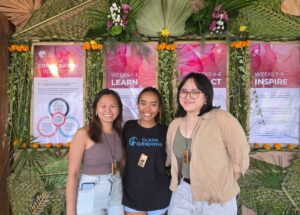
From Inspiration to Action: The Spirit of Women in Marine Conservation
Our staff member, Festi, recently represented Ocean Gardener at the Coral Catch Conference on Gili Air. Celebrating women in marine conservation, she joined workshops to share hope and restoration tactics. Festi returned inspired, proving that when women lead, our coral reefs have a brighter future.
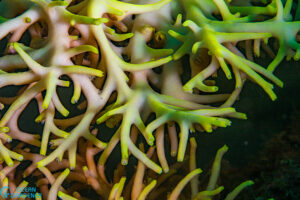
Spotlight on the Bird Nest Acropora: Acropora Jacquelinae
We review a beautiful but increasingly rare species here on the Bali reefs : Acropora Jacquelinae or the Bird Nest Acropora.

Updates on our Coral Restoration Nurseries and Sites Around Bali
We revisit 3 of our nurseries Lipah Bay (Amed), Ped (Nusa Penida) and Tulamben on their progress. We are continuing to expand our restoration areas and looking for better techniques for coral restoration.
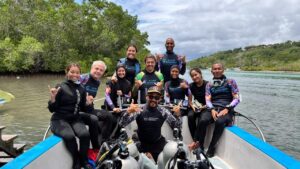
November’s Coral Restoration Full Certificate – A Month of Learning, Diving, and Restoring Hope Underwater
November 2025 became a month filled with stories for the five participants who gathered in Bali for the Coral Reef Restoration Full Certificate—a four-week learning journey that not only deepened their scientific understanding, but also strengthened their connection to the ocean and to one another as reef guardians, combining classroom theory with hands-on practice in the ocean. The three scholarship recipients—Disya Shafa Azizah, Lusiana (Blue Forest), and Daniel Jackson Jay (Trilogy Ocean Restoration, Karimun Jawa)—joined with strong motivation to expand their capabilities as restorers. They were accompanied by two self-funded participants from abroad, Mohammad Alkhonaini (Kuwait) and GP Villoresi (Italy), bringing valuable global perspectives to the experience. The first two weeks in Mero Foundation, Tulamben focused on coral morphology, genus-level identification, learning to observe coral characteristics and identify each genus through a combination of classroom discussions and daily underwater practice. As they moved into coral gardening, the learning became more hands-on: cleaning algae, removing Drupella, and planting new coral fragments
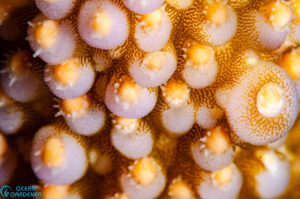
Behind the Full Moonlight: A Story of Coral Reef Life Cycles
Our staff member Anasthasia reflects on her first coral spawning in Tulamben and updates from this coral spawning season in 2025.
When Mooring Buoys Become a Threat to the Corals We Protect
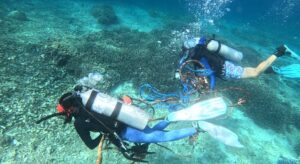
Corals – The Hidden Foundation of Marine Life In Nusa Penida, tens of thousand of visitors visit Manta Point in Nusa Penida, Bali. But behind every manta ray, mola mola, or school of reef fish lies a hidden truth: without coral reefs, none of these creatures could survive. Coral reefs provide homes to the baby fish to hide from predators, or host the species that these iconic species feed on. Ocean Gardener has been working with the local fishermen community, Nuansa Pulau. Together, we have been planting over 200,000 corals at the Ped restoration site in Nusa Penida alone. Our work is not just about conservation and restoration, it’s also about strengthening the pivot to the eco-tourism economy through snorkeling, freediving and diving. By working with the local fishermen community to replant the reefs, we have fostered a huge sense of pride and ownership. Healthy coral reefs are the true foundation of Nusa Penida’s identity. A thriving coral reef ecosystem in
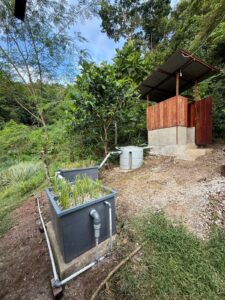
Modular, scaleable solution for sewage treatment in remote locations, the Reef Saver
While in Raja Ampat, we discovered how some communities are using a simple, modular wastewater treatment solution “Reef Saver” to minimize the impact of tourism on the local reefs.
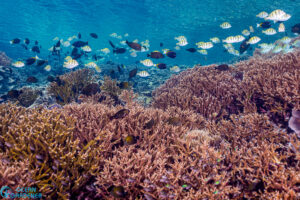
New Acropora ID course in Banda-Neira, 16-27th December 2025
A unique experience to learn about Acropora! Ocean Gardener together with Luminocean will run their first Acropora ID course in Banda this December.