
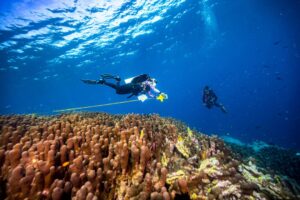
Could This Be the World’s Largest Coral Colony? Nusa Penida’s Galaxea astreata Stuns Scientists.
Only a few weeks after a remarkable colony of Pavona clavus, claiming the title of the world’s largest coral was found and measured in the Solomon Islands, another giant coral colony was measured in Nusa Penida, Bali, Indonesia, and discovered to be even bigger. In early December 2024, a team of young Indonesian marine biologists from Ocean Gardener, after receiving training from the Italian University of Milano Bicocca program ‘Map the Giants, located and measured what could be the biggest coral colony in the world! The now famous Solomon Island Pavona colony is 34m wide, 32m long, and 5.5m high. The newest contender vying to claim the title of ‘World’s Largest Coral ’ is a colony of Galaxea astreata found on the north coast of Nusa Penida, off Sental Village, a very popular diving spot in Bali. Although hundreds of divers swim through that colony every day, not many of them realize the astonishing uniqueness of this particular natural living monument.
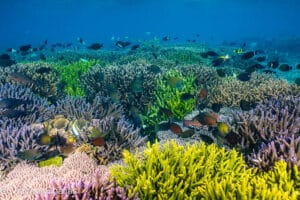
Coral Reef Conservation, through Community building.
Local community work is key to successful coral reef restoration work.
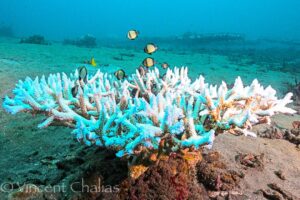
Mass coral bleaching in North Bali!
Coral Reefs of North Bali are experiencing Massive Bleaching Event
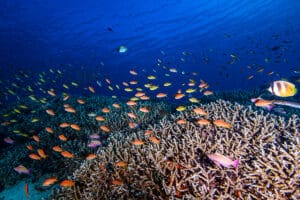
The Importance of Boat Moorings in Reef Restoration: Safeguarding Coral Reefs with Smart Solutions
Moorings maintenance is a real component of reef restoration.
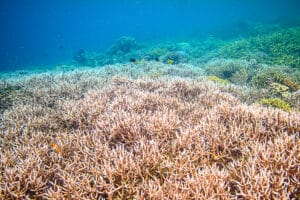
What can we do in case of coral bleaching?
There is only so much we can do in case of coral bleaching, here is few ideas!
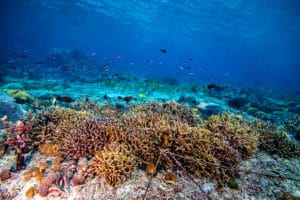
Are we going to save the world coral reefs using reef restoration?
Is coral reef restoration going to save coral reefs?
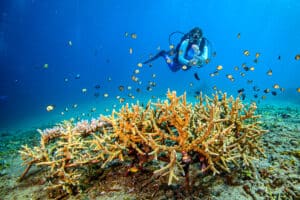
How to avoid classic mistakes when installing spiders, reef stars…
Reef stars are a fantastic reef restoration tool, but they need to be used properly
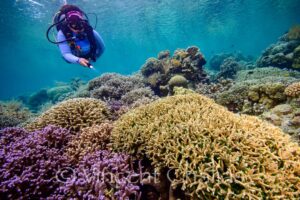
Why Choose Our Coral Reef Restoration Course?
More and more people are interested in becoming volunteers on reef restoration projects. Facing this constant influx of untrained but willing people to make a difference for Coral Reefs, we created a dedicated coral reef restoration course. This course is designed to provide the necessary training and knowledge not only to help us but also to help coral reefs all around the world. Our course is designed this course to provide students with a complete set of skills to help us on any of our many reef restoration projects. But also so you have the necessary skill set to help any coral reef restoration project anywhere around the world. Coral Reef are on the way down: Let’s face it, coral reefs around the world are never going to be the same. They are under so many different threats that coral reefs as we know them, have very little hope. What we can do is: try hard to delay the process
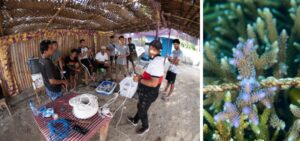
Ocean Geographic Magazine | Community Restoration on Nusa Penida
“On Indonesia’s Nusa Penida, a local community takes coral restoration into its own hands to preserve their coral reef for future generations.” Article featured in Ocean Geographic Magazine. Coral reef restoration is a popular subject at the moment with many projects sprouting all over the world. One of them caught our attention. In Indonesia, a coastal community of 26 young locals took the matter into their own hands and decided to fix their own damaged reef where they grew up, swam, and fished as young kids. Throughout their lifetimes, they have seen the local coral colonies slowly disappear, while the fish have gotten smaller, and some species have completely disappeared. Suddenly, there were no more Napoleon wrasses, large sharks left the area and giant clams were distant memories. To the untrained eye, this place seems abundant with marine life. That’s the problem of so-called shifting baselines. The eye gets used to it, and if you haven’t seen what it looked
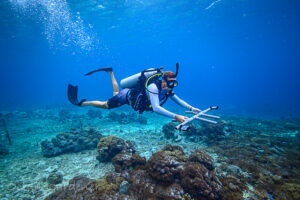
What is coral restoration monitoring?
Monitoring is an important component of Reef Restoration and Reef Management activity. It’s an important skill set that our student need to master.
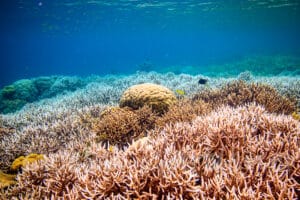
North-east parts of Indonesia going through a mild bleaching event
Unusual warm and wet weather got corals to mildly bleach in the coral triangle
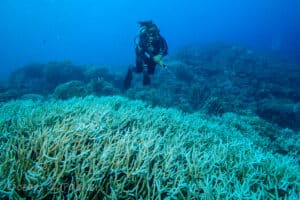
The ‘Shitty’ Truth about Human Poop and Corals!
There’s a tragic irony in our relationship with coral reefs: we often damage what we claim to love. Tourism, while bringing visitors to marvel at these underwater wonders, through human greed, negligence, and unsustainable development can ultimately destroy the very reefs that attract tourists. This is made worse by the prevalence of greenwashing, where terms like ‘eco-tourism’ and ‘blue economy’ are often misused to mask environmentally damaging practices. While the economic benefits of coral reef protection and Marine Protected Area (MPA) creation, such as enhanced fish stocks and dive tourism, are frequently emphasized. The reality is that increased human presence in remote reef areas poses a significant threat to coral health. Improper or unsustainable tourism development often leads to untreated wastewater runoff, directly damaging reef ecosystems. The balance between economic gain and genuine ecological preservation remains a critical and often neglected challenge. Coral diseases have reached the remote coral reefs On recent trips to North East Indonesia, we were shocked